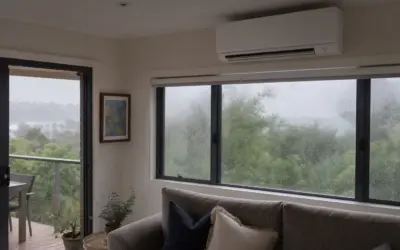
It usually happens on the first properly hot weekend of November. The split system in the lounge gets switched on after months of sitting idle, it smells a bit musty, and it doesn’t seem to be pushing out much cold air. So you ring around for a service, and the quotes don’t line up at all. One is a cheap flat fee, another is noticeably higher, and a third won’t give a number until someone has seen the unit.
That spread is the thing most people want explained when they search for air conditioner service cost. The honest answer is that the quotes often aren’t for the same job. Once you know what should be included and what changes the price, comparing them gets a lot easier.
Why we don’t publish one flat price
We’ve been servicing systems on the Central Coast for over 15 years, and the reason we quote per job rather than print a single figure is simple: two “air conditioner services” can be very different amounts of work.
A wall split in a Woy Woy unit that was serviced last spring is a quick, tidy job. A ducted system in a two-storey Terrigal home that hasn’t been touched since it went in, with the outdoor unit on a narrow side path and a roof space full of insulation, is not. Putting one price on both would mean overcharging the first customer or cutting corners on the second. So we give a transparent, upfront quote once we know what we’re working on, and the price we quote is the price you pay for the work described.
Five things that actually move the price
The type of system
This is the biggest one. A single wall split has one indoor unit and one outdoor unit. A multi-head system has several indoor heads running off one outdoor unit, and every head needs its filters, coil, fan and drain looked after. Ducted systems add a return air grille, a filter in the ceiling and an indoor unit up in the roof space, which takes longer to get to and check properly. Ceiling cassettes sit somewhere in between.
How many units you have
Plenty of homes we visit have two or three splits: one in the living area and one or two in bedrooms. Servicing them in one visit costs less per unit than booking them separately, because the travel and setup happen once. If you’ve got more than one system, mention it when you ask for a quote.
How easy it is to get to
An outdoor unit on a ground floor slab is straightforward. One mounted high on a wall, wedged behind a water tank, or sitting on a roof takes longer and sometimes needs extra equipment to reach safely. Ducted indoor units in tight or low roof spaces are the same story.
How long since the last service
A unit that gets looked at every year is mostly a check and a clean. A unit that has gone several years without attention on the coast is often a different job. We regularly open up indoor units to find the coil matted with dust and the fan barrel (the long spinning cylinder that pushes air into the room) coated in black mould. Salt air also builds up on outdoor coils and around electrical connections. That all takes time to deal with, and it’s why a neglected unit will cost more to bring back than one that’s been kept up.
A deep clean is a different job from a service
These get used as if they mean the same thing, and they don’t. A service is a health check: inspecting and cleaning the parts that affect performance and safety, then confirming the system is running as it should. A deep clean goes further on the hygiene side, with the indoor unit partly taken apart and treated with an anti-mould solution. If the unit smells or you can see mould on the vents, a deep clean is usually what you actually need, and it’s a bigger job than a standard service.
What a proper service should include
This is where cheap quotes and fair quotes usually part ways. When we do a standard air conditioner servicing visit, the work covers both halves of the system, not just the bit you can see from the lounge.
On the indoor unit, that means cleaning or replacing the filters, inspecting and cleaning the coil, checking and flushing the condensate drain (the small pipe that carries water away, and the usual cause of drips down the wall), cleaning the fan barrel and listening for unusual noises or vibration.
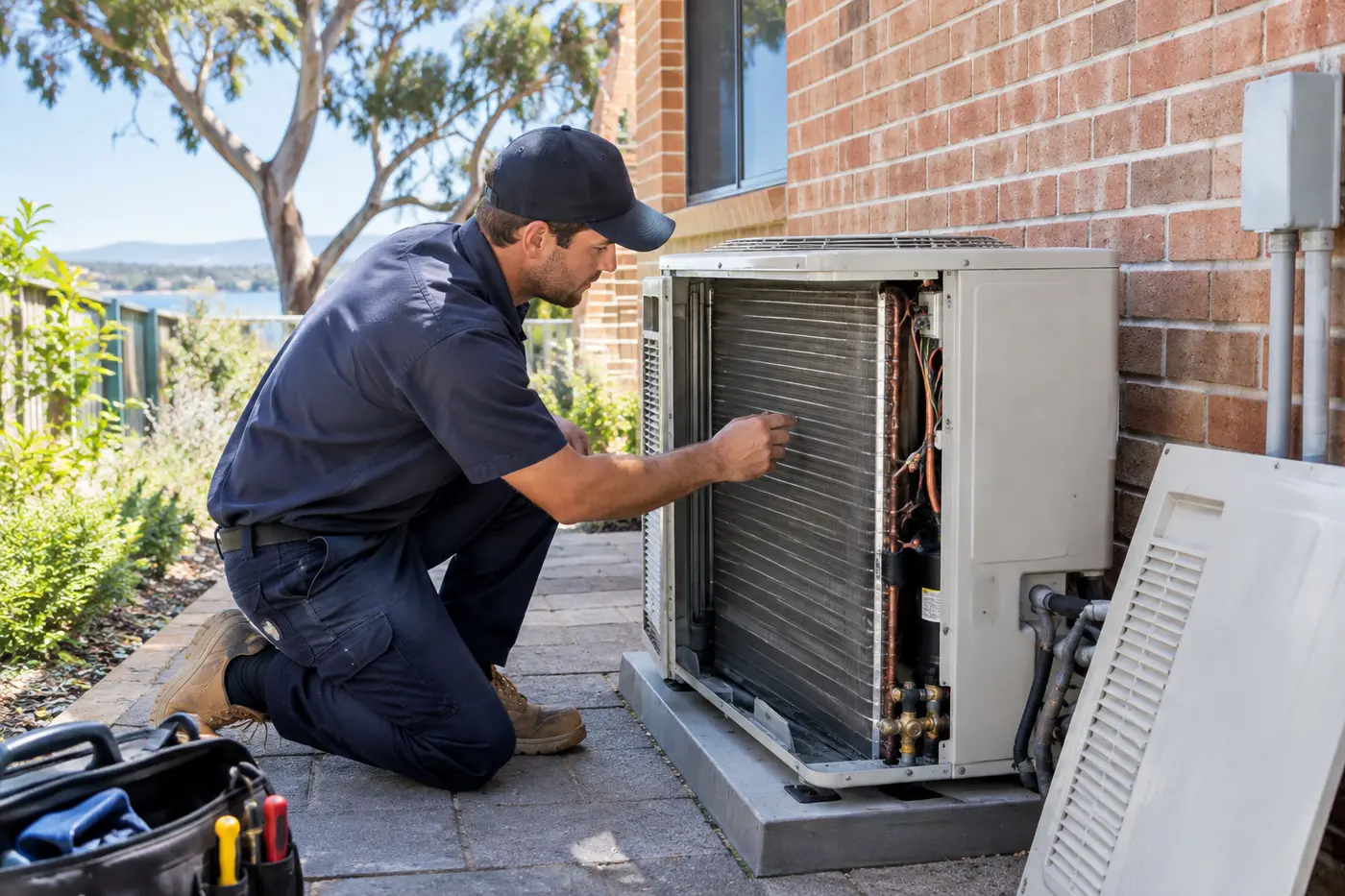
Outside, we clean the condenser coil of leaves, dirt and salt build-up, check the fan motor and blades, look over the refrigerant lines for damage or signs of a leak and make sure the unit is level and has room to breathe.
Then there are the checks you can’t do yourself. Refrigerant charge is verified, which legally requires a licensed technician. Wiring, terminals, capacitors and contactors are inspected for wear, looseness and corrosion. The thermostat is tested so the temperature you set is the temperature you get, and airflow is measured to make sure it’s where it should be.
If a quote doesn’t cover most of that, it’s probably not a service. It’s a filter clean with a service price on it.
The cheap service that costs you later
We don’t say this to knock anyone’s prices. A low quote can be perfectly fair for a simple, well-kept system. The problem is the quote that looks the same as ours on paper but turns out to be a quick filter rinse and a wipe of the front cover.
The filters are the part you can clean yourself. What you’re really paying a technician for is everything behind them: the coil, the drain, the fan, the refrigerant and the electrics. Skip those and the problems don’t disappear. A partly blocked coil makes the system work harder for the same result, which shows up on your power bill (our guide to what it costs to run air conditioning here covers why that matters so much over a Central Coast summer). A slow refrigerant leak or a failing capacitor that nobody checked tends to show up on the hottest day of the year, when every technician on the coast is booked out.
A few questions worth asking before you book:
- Does the price include the outdoor unit, or just the indoor one?
- Will the refrigerant charge and electrical connections be checked?
- Is the drain line flushed?
- If there’s mould, is cleaning it included or quoted separately?
- Will I get a note of anything you found that needs attention?
A good technician will answer all of those without hesitating.
What skipping the service can cost
Warranty is the one people forget. Many manufacturers require proof of regular professional servicing to keep the warranty valid. If a compressor fails on a system that’s still covered but has no service history, you may find yourself paying for the repair in full. For a newer system, the service fee is a small price to protect that cover. Keep your invoices somewhere you can find them.
Then there’s the breakdown itself. Most major failures don’t come out of nowhere. They build from worn parts, blocked drains and small leaks that a service would have picked up. Fixing a problem early is almost always cheaper than an emergency call-out and replacement parts in January.
And sometimes a service tells you something you’d rather know now than later: that the system is near the end of its life. If that’s where you land, our article on whether to repair or replace an older unit walks through how to make that call.
Once a year is the baseline here
We recommend a professional service at least once a year. If the system runs every day, you have pets, anyone in the house has allergies, or you live close to the water, more often can make sense. The Central Coast gives air conditioners a harder time than many inland areas. Humidity encourages mould inside the indoor unit, and salt air works on outdoor coils and connections, especially for homes along the beaches from Umina to Norah Head.
Timing matters too. Spring is the sweet spot. You’ll get a booking that suits you, and any problem gets fixed before you actually need the cooling. Leave it until the first heatwave and you’ll be waiting in the queue with everyone else.
Getting a quote you can trust
If you’d like a clear price for your system, tell us what you’ve got (split, multi-head or ducted, how many units, roughly when it was last serviced) and we’ll give you an upfront quote for the work, with no surprises on the day. You can book or ask a question through our Central Coast air conditioning service page, and we’ll get your system ready before summer arrives.
Common questions about air conditioning service costs
How much should an air conditioning service cost?
It depends on the system type, how many units you have, how easy they are to reach and how long since the last service. A single wall split that’s serviced every year costs much less than a ducted system that’s been neglected for years. The fairest way to compare is to check what each quote actually includes, not just the bottom line.
How often should an AC system be serviced?
At least once a year for most Central Coast homes. If the system runs daily, you have pets or allergies, or you live near the beach where salt and humidity are higher, more frequent servicing is worth considering. Spring is the best time to book, before the summer rush.
What is the $5,000 rule for air conditioners?
It’s a rule of thumb for the repair or replace decision: multiply the age of the unit in years by the repair quote, and if the result is over $5,000, replacement is usually the better value. It’s a rough guide only. Energy efficiency, parts availability and how well the system has been looked after all matter too.
What is the 3-minute rule for air conditioners?
It means waiting about three minutes after switching a system off before switching it back on. That gives the pressure in the refrigerant system time to settle, so the compressor isn’t forced to restart under strain. Many modern units have a built-in delay that does this for you, which is why some seem slow to start after being turned off.
How many years should an air conditioner last?
There’s no single answer, because lifespan depends heavily on how hard the system works, how close it is to the salt air and whether it’s been serviced regularly. Regular servicing is the one factor you control, and it makes a real difference to how long a unit keeps running efficiently. If yours is getting on and starting to struggle, a service will tell you whether it’s worth repairing.