Picture a weekday afternoon. Everyone is out at work or school, the house is empty, and the ducted system is quietly cooling all five bedrooms anyway, because that is how it was set to run. That is the exact problem ducted air conditioning zoning is built to solve, and it is one of the first things we look at when a Central Coast homeowner tells us their power bill has crept up over summer.
Zoning is not complicated once someone explains it plainly. This is the plain version, along with the honest answer to the question most people really want settled: is it worth it.
Zoning just means cooling the rooms you are actually using
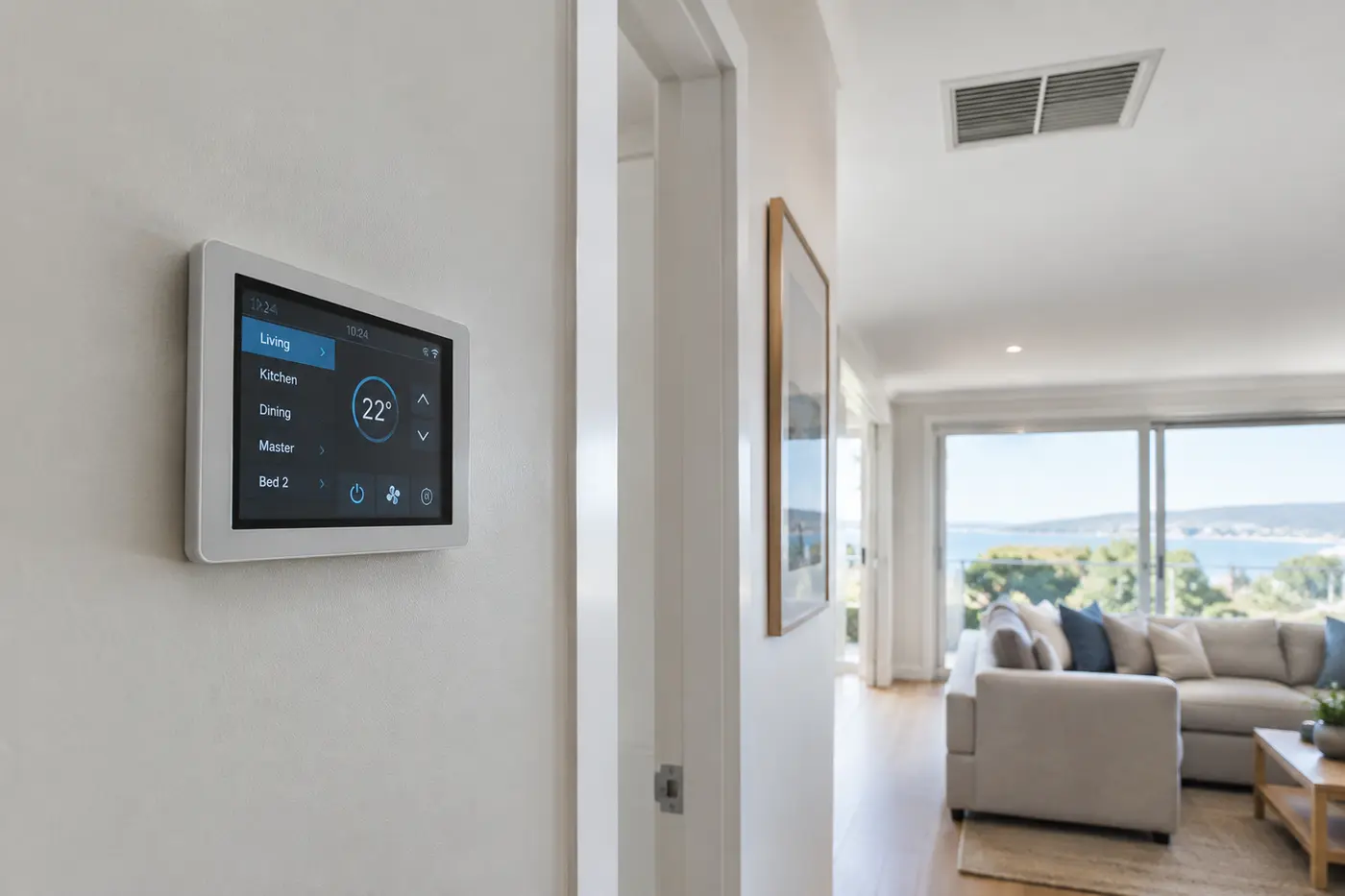
A ducted system has one indoor unit tucked away in the roof space, pushing conditioned air through a web of ducts to vents in each room. Without zoning, every vent runs at once. Zoning divides the house into separate areas, and you turn each one on or off from a wall controller or an app. Cool the living areas during the day and shut the bedrooms. Flip it at night. The unit only has to work for the space you have actually switched on.
Why it matters more on the Central Coast
Homes here range from compact beach cottages to sprawling family places on the ridges above Gosford and Wyong. The bigger the home, the more rooms sit empty for most of the day, and the more you gain from not cooling them. Add our sticky summer humidity, when a system runs long and hard, and the cost of cooling dead space adds up across a season. If you want the fuller picture on that, we broke down what it costs to run cooling across a typical Coast home separately.
How your home gets carved into zones
Most homes we set up run somewhere between five and seven zones. A common split is by how you live: a day zone for the kitchen, living and dining, a night zone for bedrooms, and often a separate zone for a study, media room or a master suite. In NSW, day and night zoning is common enough that the state’s building rules recognise it, because it is a sensible way to keep household energy use down.
The airflow itself is controlled by motorised dampers, which are small motors sitting inside the ductwork that open and close to send air where you have asked for it. You never see them. You just press a button.
The bit that trips people up: the common zone
Here is the one that surprises people. A ducted system needs somewhere for the air to go, even when you have switched most of the house off. If every zone is closed at once, the air has nowhere to escape and the system starts straining against itself. So one area, usually a hallway or a main living space, is set as a common zone that stays open to keep airflow safe. It is not a flaw or a catch. It is how the system protects itself, and a good installer plans it in from the very start.
Does zoning actually save money?
Yes, and it is one of the bigger levers you have on a ducted running cost. The logic is simple. You are not paying to cool empty bedrooms all afternoon, so the unit runs less and draws less power. Zoning also lets us size a system to the space you use at once rather than every room firing together, which is worth thinking about when you are choosing a new ducted air conditioning setup. On larger homes in particular, the saving over a summer is often the difference that makes ducted worth choosing at all.
Basic control or the smart version?
There are two broad levels to choose from. Basic zoning gives you on or off for each zone from a wall panel, which is all a lot of families ever need. Smart or app-based control goes further, letting you fine-tune airflow to individual rooms, set schedules, and switch zones from your phone before you get home. Neither is wrong. It comes down to how much control you actually want and what your budget allows. We talk both through on site rather than steering you to the dearer option by default.
Can you add zones to a system you already have?
Sometimes, yes. If your ductwork and indoor unit are in good shape, zone motors and a controller can often be retrofitted without replacing the whole system. Whether it stacks up depends on the age and condition of what you have already got, so it is worth having someone look before you commit to spending. If your system is near the end of its life, it usually makes more sense to build zoning into a replacement than to bolt it onto tired equipment.
Common questions about ducted zoning
How many zones can a ducted system have?
Most residential systems run five to seven zones, though it depends on the size of your home and the capacity of the unit. The aim is to group rooms by how you use them, not to give every single room its own zone for the sake of it.
How does ducted zoning actually work?
Motorised dampers inside the ducts open and close to direct air to the zones you have switched on. You control them from a wall panel or an app. The rooms you have turned off get little or no airflow, so the system is not wasting energy cooling space nobody is in.
Is ducted zoning worth it?
For most Central Coast homes, yes. If you regularly cool the whole house just to keep one or two rooms comfortable, zoning tends to pay for itself over time through lower bills, and it lets you buy a right-sized unit. The bigger and less consistently occupied your home, the stronger the case.
Can I add zoning to an existing ducted system?
Often you can, provided the ductwork and indoor unit are sound. It means fitting zone motors and a controller to what is already there. We will tell you honestly if your system is too old to be worth upgrading rather than replacing.
Do I really need a common zone?
Yes. A ducted system needs a path for airflow when most zones are closed, so one area stays open as a common zone. Skipping it puts strain on the unit and can shorten its life. A proper design accounts for it from the outset.
Does zoning let me set different temperatures in each room?
Basic zoning controls which rooms get air, not separate temperatures. For true room-by-room temperature control you need a smart zone system with individual sensors. That costs more, so it is worth deciding how much of that control you will genuinely use.
If you are weighing up a new ducted system or wondering whether your current one can be zoned, we are happy to take a look and give you a straight answer. We have been doing this across the Coast for over 15 years, and you can book a no-obligation quote for a zoned ducted system at your place whenever it suits.