A common phone call for us goes like this. Someone in a Gosford townhouse wants air conditioning in the living room and all three bedrooms. They have a courtyard the size of a car space, a strata committee that does not want four boxes bolted to the back wall, and no roof space worth mentioning. Ducted is out. Four separate split systems would turn the courtyard into a plant room. That is usually the moment a multi head split system comes up.
It is a good answer for some homes and a poor one for others. Here is how we explain the difference to the people we quote for.
One outdoor unit, several rooms
A standard split system is a pair: one indoor unit on the wall and one outdoor unit outside, joined by refrigerant pipes. A multi head system keeps the idea but changes the ratio. One larger outdoor unit runs several indoor units (the “heads”), each in its own room with its own remote. Most residential models we see take somewhere between two and five heads, depending on the outdoor unit.
Each room can be switched on, off or set to a different temperature without touching the others. The heads do not all have to look the same either. You might have slim wall units in the bedrooms and a floor console in a living room where there is a big window and nowhere sensible to mount anything high.
Where multi head systems earn their place
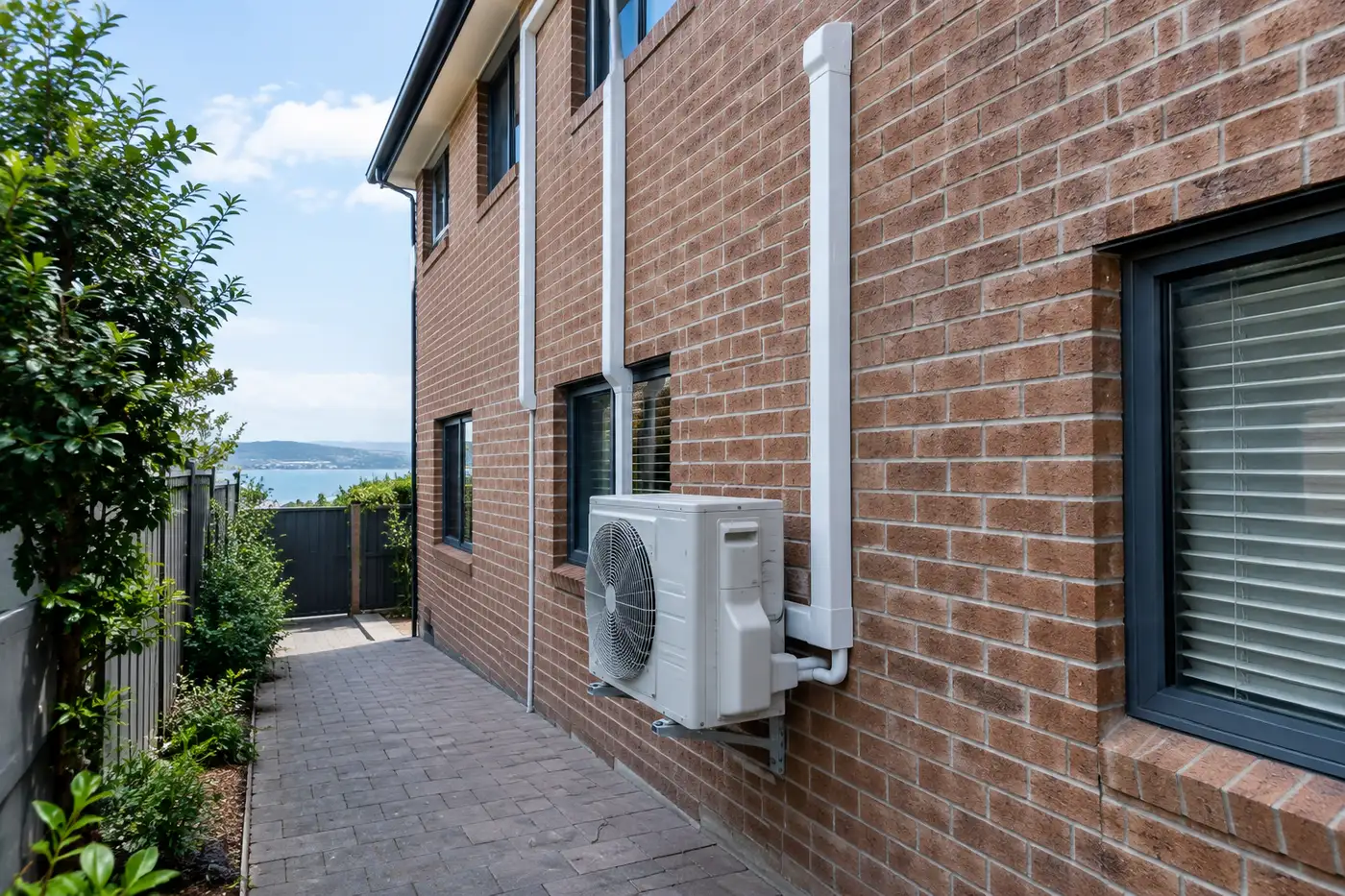
The biggest win is outside the house, not inside. One outdoor unit instead of three or four means less noise near the neighbours, less wall clutter and far fewer arguments with a strata committee. On the narrow blocks around The Entrance, Long Jetty and Woy Woy, where side setbacks can be barely wide enough to walk down, that matters a lot.
They also suit homes that cannot take ducted air conditioning. Plenty of older Central Coast houses have low pitched roofs, flat roofs or a second storey sitting right on the ceiling, which leaves nowhere to run ductwork. A multi head system only needs a pipe run to each head, and those can usually be hidden in wall cavities or tidy external covers.
Then there is control. Unlike a single ducted unit, each head is a separate cooling source. The study can be cooling while the main bedroom is off altogether, and you are only paying to cool the rooms you are actually in.
The downsides people do not always hear about
Every system has trade-offs, and multi head systems have a few that catch people out after the installer has left.
One outdoor unit means one point of failure
If the outdoor unit develops a fault, every room on it loses heating and cooling at once. With separate split systems, one breakdown leaves the rest of the house comfortable. For a family that relies on air conditioning through a January heatwave, this is worth weighing honestly.
Every head usually has to run in the same mode
This one surprises people. On most multi head systems, all the heads must be either heating or cooling at the same time. You cannot have one room on heat and another on cool. Most of the time that is fine, but in a two-storey home where upstairs bakes on a spring afternoon while a downstairs room stays cool, it can be a nuisance.
The outdoor unit’s capacity is shared
The outdoor unit is sized for the house as a whole, assuming not every room is flat out at once. If every head is running at maximum on a scorching summer afternoon, each room can feel less punchy than a dedicated split would. Good sizing allows for how you actually live in the house, which is why we look at room sizes, orientation and window area before recommending anything.
Repairs and replacement can cost more
Multi head outdoor units are more specialised than standard split outdoor units, and parts can be harder to find. And when the outdoor unit reaches the end of its life, the indoor heads are often replaced with it, because new outdoor units are not always compatible with older heads.
Multi head vs single splits vs ducted, side by side
We already have a full guide on choosing between ducted and split systems, so here is how a multi head system sits between the two.
| Separate split systems | Multi head split system | Ducted | |
|---|---|---|---|
| Outdoor units | One per room | One for several rooms | One for the whole house |
| Needs roof or underfloor space | No | No | Yes |
| Room-by-room control | Yes | Yes | Only with zoning |
| Heat one room, cool another | Yes | Usually no | No |
| If the outdoor unit fails | One room affected | All rooms on it affected | Whole house affected |
| Look inside the room | Wall unit | Wall, floor or ceiling heads | Discreet ceiling vents |
If you like the idea of room-by-room control but your roof does have space, ducted with zones is also worth a look. We cover that in our post on whether ducted zoning is worth paying for.
Salt air and the outdoor unit
Because everything depends on one outdoor unit, where it goes and how it is protected matters more than usual. In beachside suburbs like Terrigal, Avoca Beach and Norah Head, salt spray works its way into coils and electrical connections over time. We try to place the unit out of the direct sea breeze where we can, and we recommend a regular service so corrosion gets caught early, rather than after it has knocked out cooling to the whole house.
So who should get one?
From the homes we see, a multi head system tends to make sense when:
- you want three or more rooms conditioned and have room for only one outdoor unit
- you live in a townhouse, unit or strata complex with rules about external equipment
- the roof cannot take ducted, but you do not want a box on every external wall
- the rooms are fairly close together, which keeps pipe runs short
It is usually the wrong pick if you only need two rooms done and have space for two outdoor units (two standard splits are simpler and give you a backup), or if your rooms have very different needs at the same time of day. In those cases we will say so, even if it means a smaller job.
Every house is a little different, and the right layout comes down to things you can only judge on site: wall construction, where pipes can run, switchboard capacity and where the outdoor unit can sit without annoying anyone. Our team has been doing this on the Central Coast for over 15 years, and we are happy to walk through your options and give you a clear, upfront quote. Have a look at our air conditioning installation service to get started.
Common questions about multi head split systems
Are multi head split systems any good?
Yes, for the right house. They are well suited to homes that need several rooms conditioned but have limited outdoor space or no room for ducting. They are less suited where you need different rooms heating and cooling at the same time, or where you want a backup if one unit fails.
What are the disadvantages of a multi split air conditioner?
The main ones are a single point of failure, heads that usually must all run in the same mode, shared capacity across rooms, and repairs or replacement that can cost more than with standard splits. None of these are deal breakers, but they should be part of the decision.
How much does a multi head split system cost?
It depends on how many heads you need, the size of the outdoor unit, the type of heads and how long the pipe runs are. Because those details vary so much between homes, we quote after seeing the house rather than giving a figure over the phone.
What are common problems with multi split AC?
The issues we see most are mode conflicts (one person wants heat while another wants cool), rooms that feel underpowered when every head is running hard, and blocked drains or dirty filters on heads that rarely get used. Regular servicing of every head, not just the ones in the living areas, prevents most of this.
Can you heat one room and cool another with a multi head system?
On most residential multi head systems, no. The outdoor unit runs in either heating or cooling mode, and every head follows it. If that matters to you, separate split systems are usually the better choice.
What is the 3 minute rule for aircon?
Most systems have a built-in delay of about three minutes before the compressor restarts after being switched off. It protects the compressor from short, repeated starts. If you turn a unit off and straight back on and nothing seems to happen, give it a few minutes before assuming a fault.