Why Clean Coils Are Your Secret Weapon Against Soaring Central Coast Cooling Bills
Summer on the Central Coast is a unique experience: long sunny days, the welcoming sea breeze in the evening, and the inevitable urge to crank up the air conditioner to stay comfortable. However, many households and businesses face the frustrating reality of soaring energy bills and indoor temperatures that just won’t budge. The surprising yet often overlooked culprit behind this is the condition of your air conditioner’s coils.
Both the evaporator coil inside your indoor unit and the condenser coil located outside work tirelessly to move heat away from inside your home or workplace. When these coils are clean, they facilitate optimal heat exchange, allowing your system to cool efficiently and keep energy costs down. Yet, on the Central Coast, environmental factors such as salt spray from the sea, dust, pollen, and mould accumulation can quickly coat these coils with debris. This buildup acts like an insulating barrier, reducing airflow and making your air conditioner labour harder to maintain your comfort.
This article explores why keeping coils clean is a vital part of managing cooling costs and maintaining an effective air conditioning system in the Central Coast’s distinct climate. You’ll discover practical, easy-to-follow DIY checks, understand when it’s time to call in specialists like Air Conditioning Central Coast, and learn how a simple maintenance step can lead to significant energy savings — keeping both your home comfortable and your power bills in check.
The Hidden Link: How Dirty Coils Drive Up Costs
What coils do and why dirt matters
The heart of any air conditioning system lies in its coils: the evaporator coil inside the air handler and the condenser coil outdoors. The evaporator coil absorbs heat from your indoor air — effectively cooling your home — while the condenser coil expels this heat outdoors.
Both coils are composed of metal fins and tubes designed to maximise heat transfer. When these surfaces are coated with dust, pollen, salt residue, or mould, the layer acts as an unintended insulating barrier. This interference means the coils can no longer transfer heat as effectively, forcing your air conditioner to work harder and run longer to achieve the set temperature.
This inefficiency directly affects the system’s refrigerant pressure. Higher pressures make the compressor — the unit responsible for circulating refrigerant — work overtime, which consumes extra electricity. A study by the US Department of Energy demonstrates that a dirty evaporator coil can increase energy use by over 30%, a figure that patients tune to the Central Coast environment.
For Central Coast residents, coastal air with its salt content, combined with seasonal dust and pollen, can accelerate the rate of dirt buildup. Additionally, sea spray can corrode outdoor metal surfaces including condenser coils. This unique environmental mix requires more attentive coil maintenance compared to inland regions.
Dirt signs and consequences
Identifying dirty coils early can save money and extend your air conditioner’s lifespan. Watch for these telltale signs:
- Longer cooling cycles: Your system seems to run continuously or for extended periods, struggling to reach your set temperature.
- Uneven indoor temperatures: Some rooms feel warm while others are cooler, indicating airflow and cooling inconsistencies.
- Sudden temperature swings: The thermostat cycles erratically due to inefficient heat exchange.
- Ice build-up: You notice frost or ice forming on the indoor evaporator coil, a symptom of poor heat absorption.
- Higher electricity bills: Energy consumption spikes notably during the summer months.
Ignoring these signs leads to several negative outcomes. Your system will experience greater wear and tear from running longer and harder, potentially causing premature component failure. Over time, the efficiency drop and increased strain can result in expensive repairs or even complete system replacement.
A local example involves a Central Coast home in Gosford where energy bills increased by nearly 20% during peak summer months. After an evaporator coil cleaning and routine maintenance, bills dropped back, reflecting improved system performance and efficiency.
Australian context: coastal and climate considerations
The Central Coast’s proximity to the ocean presents unique challenges. Salt spray carried on coastal winds deposits salt crystals onto outdoor condenser coils which not only reduce the efficiency of heat exchange but also promote corrosion — a hidden expense that can shorten equipment life.
Humidity levels in coastal areas also contribute to mould and fungal growth on coils, creating biofilms that stubbornly cling to fins and reduce airflow. Furthermore, seasonal events like bushfires send fine ash into the air, which settles on both indoor and outdoor coils, exacerbating dirt buildup and potentially compromising your system’s performance.
Pragmatically, scheduling coil cleaning either before spring to prepare for increased summer demand or immediately following summer to remove accumulated grime can maximise system efficiency throughout the year. This seasonal approach aligns with the natural environmental cycles on the Central Coast and ensures your system is ready to perform when you need it most.
Evaporator Coil Cleaning 101: From DIY Checks to Pro Service
DIY checks and safe practices
While professional servicing is invaluable, a few simple DIY checks can help you monitor your evaporator coil condition and keep your system running smoothly:
- Power off your air conditioner: Always switch off power at the switchboard before attempting any inspection or cleaning to eliminate risk of electric shock.
- Access the coil safely: Remove the indoor unit’s access panel carefully; avoid forcing or bending any components. Most coils are partially visible at the air handler.
- Visual inspection: Look for visible dust, dirt, and mould on coil fins. If the coil is lightly soiled, a gentle vacuum with a brush attachment or a soft brush can remove deposits.
- Avoid sharp tools: Do not use scrape tools or anything that can bend or damage the delicate aluminium fins, as this reduces airflow.
- Cleaning agents: Opt for mild, non-corrosive cleaners or coil-specific solutions designed for indoor evaporator coils. Avoid harsh chemicals close to electrical components or drain areas.
- Rinsing precautions: If rinsing is necessary, use a low-pressure spray to prevent damage, ensuring water does not flow into electrical parts.
- Safety gear: Protect your eyes with goggles and wear gloves to minimise exposure to dust and cleaning chemicals.
Additionally, ensure your condensate drain line remains free of blockages during and after cleaning, as stagnant water can cause mould issues and water damage in your home.
Professional cleaning methods
For a truly thorough evaporator coil cleaning, professional services combine specialised tools, chemicals, and expertise to restore your air conditioner’s efficiency:
- Mechanical brushing and fin combing: Professionals use soft brushes and fin straightening tools (“fin combs”) to remove stubborn dirt and realign bent fins for maximised airflow.
- Biodegradable coil cleaners: Environmentally-safe, non-acidic formulas break down grime and biofilms without damaging sensitive coil surfaces or indoor air quality.
- Low-pressure rinsing: Gentle washing flushes away loosened residue while avoiding potential damage to electrical components and materials.
- Drain Pan and Line Inspection: Cleaning includes checking the condensate pan for mould or blockages and ensuring condensation drains freely to prevent water damage.
- Comprehensive diagnostics: Technicians can assess refrigerant pressure, temperature differentials, and airflow performance to confirm your system functions optimally after cleaning.
This level of service protects your investment and ensures the longevity and energy efficiency of your air conditioning system in the challenging Central Coast environment.
What a typical cleaning service includes
A full professional evaporator coil cleaning typically involves an initial assessment to determine coil condition and any ductwork issues. Following this, the cleaning process includes:
- Removal of dust, pollen, mould, and grime from the evaporator coil fins using mechanical tools and coil cleaning agents.
- Cleaning the drain pan and condensate lines to prevent water-borne contamination and blockages.
- Inspection for leaks, corrosion, or early signs of damage on coil and adjacent components.
- Post-service performance testing including measuring indoor temperature differentials and airflow rates to verify cleaning effectiveness.
- Providing documentation such as before-and-after photos, notes on coil condition, and recommendations for follow-up maintenance tailored to local Central Coast needs.
For those seeking professional help in this area, Air conditioner cleaning Central Coast services can provide expert coil maintenance designed for local environmental factors.
Condenser Coils: The Outdoor Battlefront in the Coastal Outdoors
Role of outdoor condenser coil
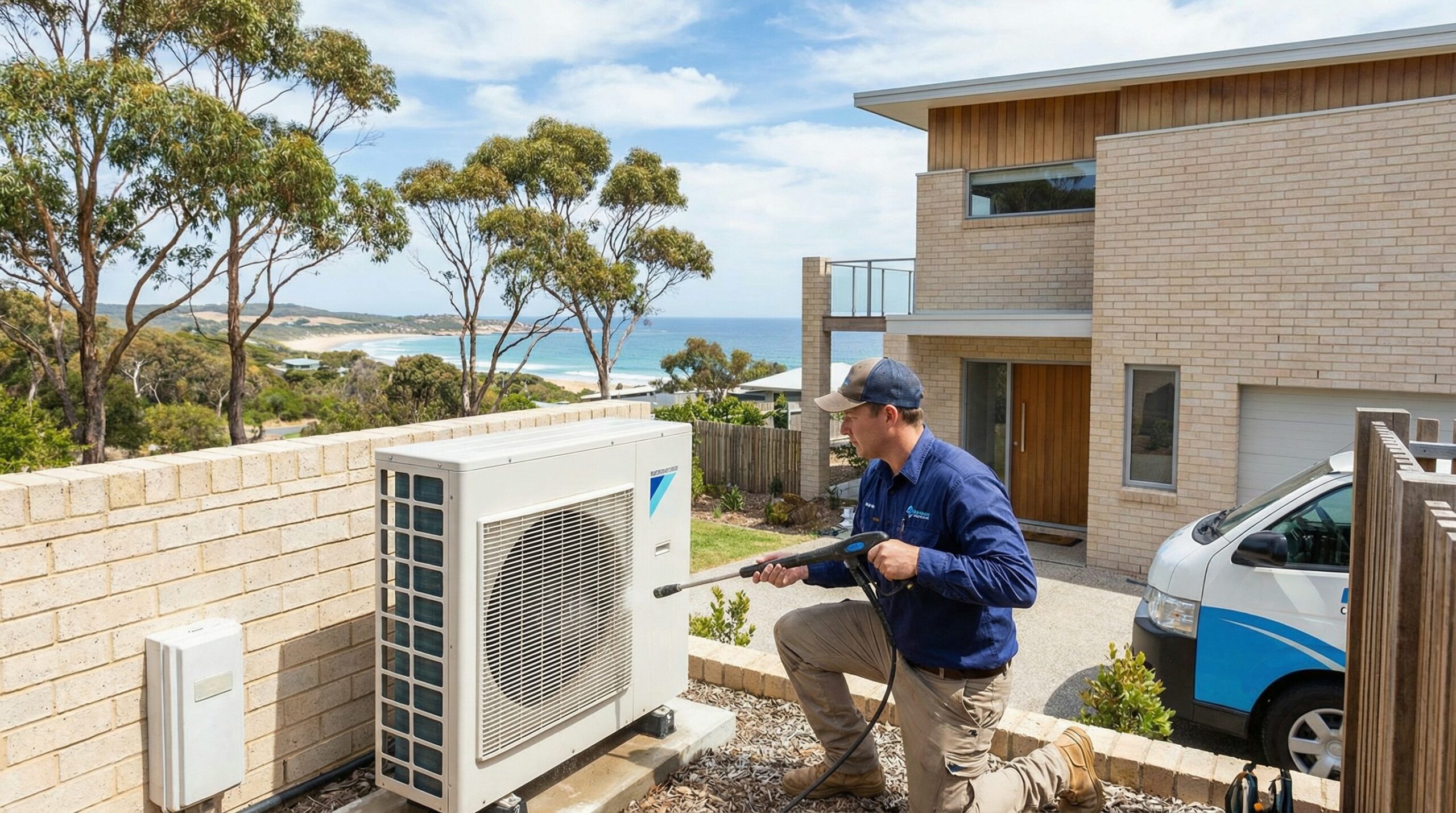
The outdoor condenser coil plays a critical role in your air conditioning system. After the evaporator coil absorbs heat from inside your home or office, this heat must be released outdoors. The condenser coil achieves this by transferring heat from the refrigerant to the outside air through its network of metal fins and tubing.
For efficient heat dissipation, the coil fins must be clean and unobstructed. When exposed to dirt, leaves, grime, and salt residues common on the Central Coast, the condenser coil’s ability to shed heat diminishes. This leads to higher discharge temperatures, causing the compressor to exert more effort — resulting in increased power consumption and wear.
Coastal environment challenges
The Central Coast’s coastal environment presents several obstacles for condenser coils:
- Salt spray: Regular exposure to salty sea air promotes corrosion, which degrades metal fin and tube materials.
- Humidity: High moisture levels encourage the growth of algae or mould on coil surfaces.
- Seasonal debris: Leaves, twigs, and sea mist accumulate around the condenser, blocking airflow and trapping dirt.
- Wildlife interference: Bird droppings, nests, and small animal incursions clog the coil or damage fins.
These factors mean condenser coil maintenance is especially vital along the Central Coast. Homes located within direct sea spray zones or exposed coastal winds benefit from annual or biannual coil inspections and cleaning to stave off damage and efficiency loss.
Signs your condenser coil needs attention
Some clear indicators that your outdoor unit requires cleaning or servicing include:
- Noticeably hot outdoor unit: If the condenser cabinet feels hotter than usual during operation, heat dissipation is compromised.
- Increased fan noise: The fan may run louder or more frequently as it struggles to cool the condenser coil.
- Reduced cooling effectiveness: Your home may not reach desired temperatures despite running the system longer.
- Visible dirt buildup: Clumps of dust, salt residue, or organic material visibly coating the coil fins.
- Bent or damaged fins: Noticeable deformities that impede airflow.
Regular inspection and timely cleaning of the condenser coil by qualified professionals ensure your air conditioner continues delivering efficient cooling tailored to Central Coast conditions.
Ducted Systems and Coil Cleanliness: A Central Coast Advantage
Ducted vs split: coil cleaning implications
Ducted air conditioning systems feature a central evaporator coil connected to a network of air ducts distributing conditioned air throughout the home or commercial building. Split systems, by contrast, generally have individual indoor units for each zone.
With ducted systems, coil cleanliness has a broader impact. A dirty evaporator coil reduces the entire duct network’s ability to effectively cool multiple rooms, while the outdoor condenser coil’s condition influences the overall system’s energy consumption.
When either coil is dirty, your ducted system works harder, increasing energy use and reducing comfort levels throughout your property. This makes regular coil cleaning essential for Central Coast homes and enterprises relying on ducted solutions for even, efficient cooling.
Impact on airflow and zoning
Coil condition directly affects airflow, a key factor for effective zoning in ducted systems. Dirty coils block or restrict airflow, undermining the system’s ability to deliver consistent temperatures across different zones.
For families or businesses on the Central Coast using ducted air conditioning central coast systems, this can manifest as some rooms feeling cold while others remain warm, defeating the purpose of the ducted setup’s customisable comfort.
A clean evaporator coil allows for smooth airflow through ducts, consistent conditioning, and proper pressure balance, which keeps zoning controls accurate and effective. This is especially important in multi-storey homes or commercial spaces common to the Central Coast.
Best practices for ducted systems
To ensure your ducted system runs at peak efficiency:
- Coordinate evaporator coil cleaning with periodic duct cleaning to remove dust and debris accumulated in the air pathways.
- Schedule service checks ahead of the summer months when cooling demand spikes, preparing both evaporator and condenser coils for increased workloads.
- Maintain clean return air grilles and replace filters regularly to protect coils from excess dust and dirt.
- Engage professionals familiar with the specific maintenance needs of ducted systems in coastal environments.
Following these steps helps Central Coast residents enjoy the full benefits of ducted air conditioning — optimal comfort and energy savings.
Money on the Table: Calculating Energy Savings in Central Coast Homes
How to estimate savings from coil cleaning
Quantifying energy savings from coil cleaning involves understanding your current cooling energy usage and how efficiency improvements translate into cost reductions.
Begin by reviewing your household’s electricity bills during peak summer months. If your system has been operating with dirty coils, a cleaning can reduce compressor run-time by anywhere from 10% to 30%, depending on the severity of dirt and system condition.
A conservative approach is to apply a modest efficiency gain, say 10%, to your summer cooling energy consumption. For example, if cooling accounts for 500 kWh monthly at $0.30 per kWh, a 10% reduction equates to a $15 saving per month or $90 over a typical six-month cooling season.
Keep in mind actual savings vary by system age, usage patterns, and load. Newer, well-maintained systems may see smaller gains, while older or neglected units can experience more profound improvements.
Factors affecting ROI in coastal climates
Several factors influence the return on investment (ROI) when investing in regular coil cleaning on the Central Coast:
- Usage intensity: Homes running air conditioners for extended summer periods or high indoor humidity will benefit more significantly from cleaning.
- System age: Older systems may show smaller percentage improvements but enjoy extended lifespan and reduced repair costs.
- Cleaning frequency and quality: Routine professional cleaning with eco-friendly products typically yields better results than occasional DIY efforts.
For coastal households dealing with accelerated dirt and corrosion, maintaining a regular cleaning schedule protects against costly repairs and lost efficiency.
Real-world examples/case studies
Consider a Gosford-area home where the owner scheduled professional coil cleaning and general maintenance before summer. The following bills showed a noticeable reduction in monthly cooling costs, with air conditioning running more quietly and effectively.
Similarly, a rental property in Terrigal incorporated routine coil and duct cleaning into seasonal maintenance. The owner reported improved thermostat stability, fewer service calls during hot months, and tenants experiencing more comfortable indoor temperatures.
These cases demonstrate the tangible benefits of coil maintenance tailored for the Central Coast climate’s specific demands.
Choosing the Right Local Expert: What to Look For on the Central Coast
Licenses, insurance, and safety
When seeking professional coil cleaning or air conditioning services on the Central Coast, ensure your chosen provider holds the correct licences for installation and servicing. This compliance guarantees adherence to Australian standards, including refrigerant handling, electrical safety, and equipment servicing.
Additionally, verify the contractor’s public liability and workers’ compensation insurance to protect your property and household in case of accidents or damages during service.
Professionals trained specifically in coil cleaning techniques, refrigerant management, and safety protocols are best equipped to deliver thorough and safe maintenance with optimal results.
Questions to ask before booking
Before scheduling a service, consider asking potential providers the following questions:
- Do you offer both evaporator and condenser coil cleaning services, and do you inspect drainage systems as part of the process?
- What cleaning methods and products do you use, and are they non-corrosive and environmentally friendly?
- What maintenance intervals do you recommend for coil cleaning based on my system’s age and usage?
- Do you provide a written maintenance plan and post-service report documenting the work done and recommendations?
These queries ensure transparency and professionalism, helping you select a qualified expert suited to the local Central Coast climate.
Local brands and service packs
The Central Coast market commonly features brands like Mitsubishi Electric, Daikin, Fujitsu, LG, Panasonic, and Carrier Australia. Choosing a service provider familiar with these brands and their specific maintenance requirements is beneficial.
Many providers, including Air Conditioning Central Coast, offer tailored maintenance plans, emergency repair services, and pre-season inspections. Trust a company that understands coastal climate influences and compliance with Australian Minimum Energy Performance Standards (MEPS) for a greener, cost-effective solution.
For a variety of air conditioning and maintenance solutions, you can explore our services to find the best fit for your home or business needs.
Maintenance Plans that Work: Keeping Coils Clean Year-Round
Seasonal maintenance checklist
A simple, seasonal approach ensures your air conditioning system performs reliably:
- Pre-summer: Inspect and clean coils and filters, verify refrigerant charge, clear drain lines, and check outdoor coil cleanliness before demand peaks.
- Post-summer: Assess coil condition, flush drain pans, and prepare the system for the cooler months, preventing moisture-related issues.
- Pre-winter: Final check to address any residual issues, keeping the system ready for potential heating needs on the Central Coast.
- Include duct and filter inspections within your plan to maximise air quality and energy efficiency year-round.
Filters, airflow, and routine inspections
Filters play a critical role in protecting coils by trapping dust and debris. Scheduling filter replacements or cleanings aligned with your usage patterns directly impacts coil cleanliness and system efficiency.
Checks of duct seals and return air pathways are important to eliminate leaks that could reduce conditioned airflow and waste energy. Frequent professional inspections ensure early detection of problems before they escalate.
Experts generally recommend professional coil cleaning anywhere from annually to biannually, depending on environmental factors and system type. Regular servicing helps avoid costly repairs and sustains energy savings.
Budgeting for regular coil care
Regular coil cleaning and maintenance typically incur a modest service fee combined with the cost of consumables like cleaning agents and filters. Viewed as a preventative investment, regular care avoids expensive system breakdowns and helps maintain energy efficiency, yielding long-term savings.
Consider maintenance packages that bundle coil cleaning with filter changes and system performance diagnostics. Such plans offer predictable annual costs and streamline upkeep, particularly useful for Central Coast residents dealing with coastal conditions.
Beyond Energy Bills: Indoor Air Quality and System Longevity
Air quality benefits from clean coils
Dirty coils can harbour mould, bacteria, and dust that circulate through your home or office each time the system runs. Keeping coils clean supports more consistent airflow and better humidity control, reducing the presence of airborne allergens and improving overall indoor air quality.
For Central Coast families, where coastal humidity and pollen levels are high, this translates into a healthier living environment with fewer respiratory irritations or allergy symptoms.
Reduced wear, fewer repairs
Efficient heat exchange resulting from clean coils means less strain on compressor and fan motors. This reduction in workload lowers the risk of mechanical failures and extends the service life of your air conditioning system.
By scheduling regular coil cleaning and maintenance through providers like Air Conditioning Central Coast, you protect your investment and ensure reliable, cost-effective comfort for years to come.
Environmental considerations and sustainability
Optimising your air conditioner’s efficiency through regular coil cleaning reduces electricity consumption and carbon emissions. This benefit aligns with broader sustainability goals and Australian energy standards.
Pairing coil maintenance with the adoption of MEPS-compliant equipment supports greener operations in residential and commercial settings alike, contributing to environmental responsibility on the Central Coast.
Keep Your Cool and Your Costs Low: A Simple Coil-Care Plan for the Central Coast
Clean coils are the unsung heroes of energy savings and comfort for Central Coast homes and businesses. Regular evaporator and condenser coil cleaning ensures your air conditioning system maximises heat exchange, reduces compressor strain, and supports better indoor air quality — all while lowering your electricity bills.
Couple this coil care with a strategic maintenance plan that includes filter changes, duct inspections, and pre-season servicing to keep your system finely tuned for peak performance.
Start with a simple coil check yourself, then connect with professionals such as Air Conditioning Central Coast, who offer tailored cleaning and maintenance solutions designed precisely for the unique climate and challenges of the Central Coast.
For expert advice on keeping your air conditioner running efficiently, learn more about professional air conditioner cleaning services and explore our services to develop a maintenance schedule that delivers lasting savings and comfort.
Take control of your cooling costs this summer and beyond — your coils will thank you!
For further insights on energy efficiency and best practices in maintaining cooling systems, visit the Australian Government’s energy.gov.au resource on appliance maintenance and energy savings.