It is the first proper hot night of December. The bedroom is sitting at sticky and stubborn, nobody is sleeping, and the next morning someone is standing in a hardware store aisle looking at a portable air conditioner in a box. You can wheel it home today and plug it in tonight. A split system means a quote, an installer and a wait. We get asked about the portable air conditioner vs split system choice every year as summer starts, so here is the honest version, from people who have worked on Central Coast systems for over 15 years.
The short answer: one is a stopgap, the other is a fixture
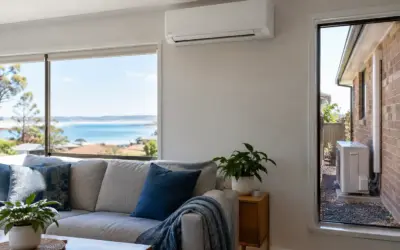
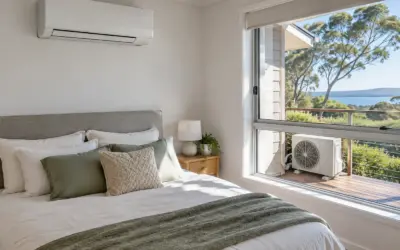
A portable unit is a whole air conditioner squeezed into one box that sits in the room with you. A split system separates the noisy, hot half of the machine (the compressor and condenser, in an outdoor unit) from the quiet half that blows cool air (the indoor head on your wall). That separation is the whole story. Almost every difference you will notice in daily use comes from it.
Portables have a place. But if you are planning to cool the same bedroom or living area every summer for years, a split system is built for that job and a portable is not.
Why a portable unit is working against itself
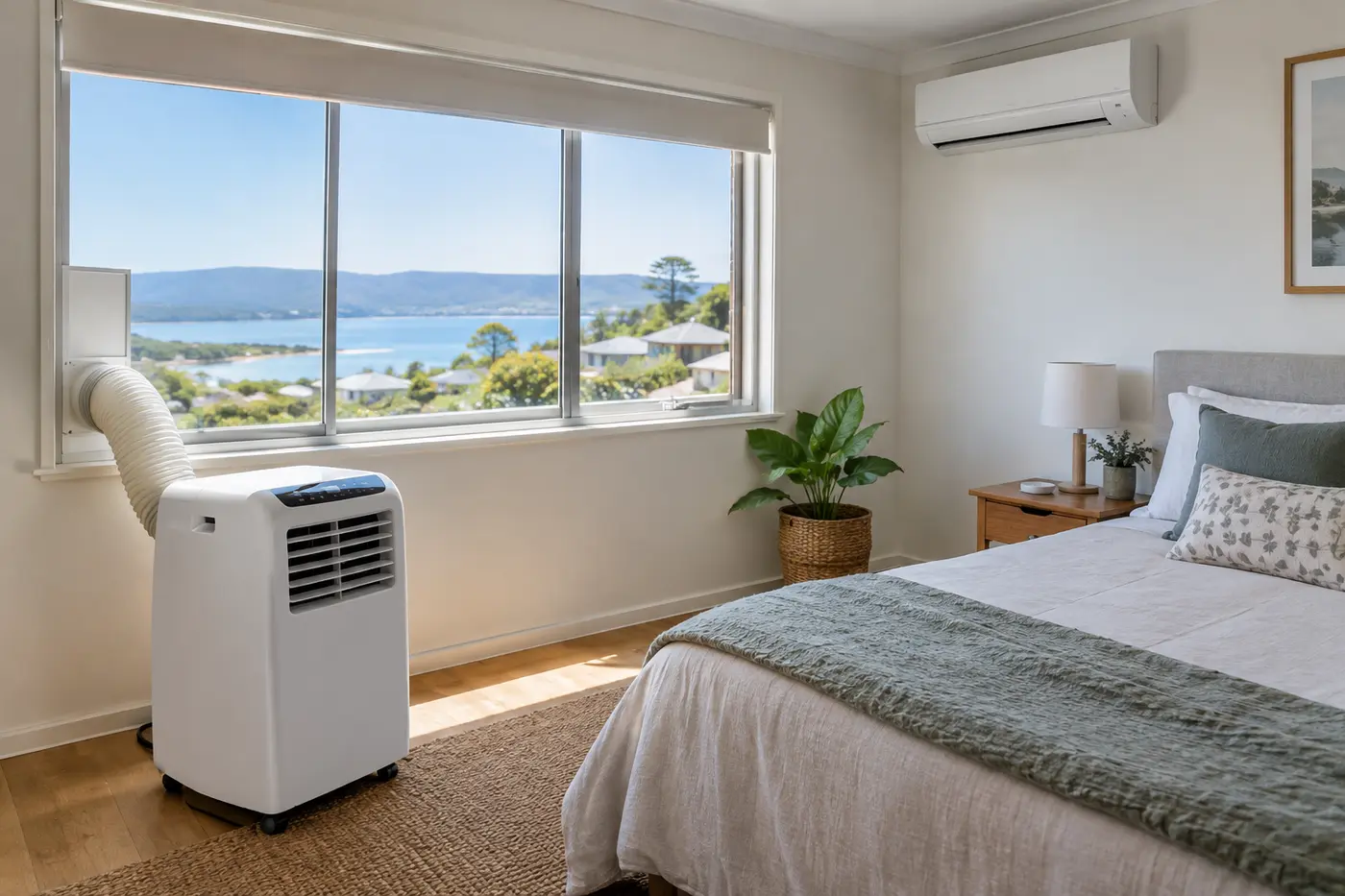
Any air conditioner moves heat from inside to outside. A split system does that with refrigerant pipes running through the wall to the outdoor unit. A portable has to dump its heat through a wide flexible hose poked out a window or sliding door, and that hose gets hot. It sits in the room radiating some of the heat it just removed.
Then there is the air itself. Most portables are single hose designs. They push air out through that hose, and the room has to replace it from somewhere. It gets sucked in under doors, through gaps around the window kit and from the rest of the house, which on a summer afternoon means warm air coming straight back in. Dual hose models pull outside air in through a second hose and handle this better, but they cost more and still leave the compressor humming in the room.
The result is usually a room that feels cooler near the unit and only so-so everywhere else. People often blame the brand. It is really the design.
Humidity is where Coast homes feel the gap most
Our summers are as much about moisture as temperature. Close to the water, around the lakes and in the valleys behind Gosford and Wyong, a warm day with heavy air is often what makes a house unbearable.
Both types pull water out of the air as they cool. A split system drains that water outside through a dedicated pipe, all day, without you thinking about it. Many portables collect it in an internal tank or try to evaporate it back out through the exhaust. On a humid Coast day a tank can fill quickly, and when it is full the unit stops cooling until someone empties it. Middle of the night is a common time to discover this.
Split systems also give you a proper dehumidifying setting, which is handy on those muggy days that are not especially hot. We explain how to use it in our post on dry mode for Central Coast humidity.
The cheap box is rarely the cheap option
The sticker price of a portable is lower, and if you only need cooling for a handful of nights it may stay the cheaper choice. Over several summers the maths shifts. Because a portable is fighting its own heat and leaking warm air back in, it tends to run harder and longer to reach the same temperature. That shows up on the power bill.
Modern split systems are usually inverter units, which slow the compressor down once the room is comfortable instead of switching hard on and off. For a room you cool most nights, that efficiency adds up. If you want to understand what actually drives the number on your bill, our guide to what air conditioning costs to run on the Coast walks through it.
Heating is the other half of the value. A reverse cycle split system heats as well as cools, and for many Coast homes it becomes the main winter heater too. Plenty of portables are cooling only, and the ones that do heat are rarely a match for a split system on a cold July night in somewhere like Kulnura or Mangrove Mountain.
When a portable genuinely makes sense
We are not here to talk anyone out of a sensible purchase. A portable is a fair choice when:
- you are renting and the landlord will not approve a fixed install
- strata rules or the building make an outdoor unit impossible
- you need something this week while a proper system is planned
- the room is used rarely, like a spare room for summer visitors
- you want to move one unit between rooms or take it with you
In those situations, a dual hose model, a well sealed window kit and keeping the door closed will get you the best result the design allows.
Where a split system earns its place on the wall
Bedrooms used every night, open plan living areas and home offices are where we see split systems pay off. They are far quieter because the compressor is outside. They cool the whole room evenly instead of the space in front of the unit. They take up no floor space, there is no hose to trip over and no tank to empty, and they heat in winter.
The trade off is upfront cost and the installation itself. The outdoor unit needs a sensible spot with airflow, the pipe run should be as tidy and short as practical, and the drain needs to fall properly so you do not end up with water marks down the wall. Sizing matters too. An undersized split will struggle through a heatwave much like a portable does. If you are weighing it up, our split system installation team can look at the room, the walls and where the outdoor unit can go before you commit to anything.
Salt air changes the maintenance picture, not the decision
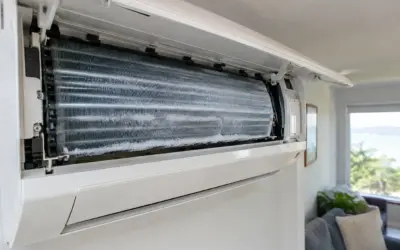
One fair point in favour of portables: they live indoors, away from the salt spray that settles on outdoor units in Terrigal, Avoca Beach, Umina Beach and anywhere close to the ocean. A split system outdoor unit on the Coast does need regular cleaning and the occasional check for corrosion.
That is a maintenance job, though, not a reason to avoid a split system. Placement helps a lot, and so does regular servicing. A portable has its own upkeep as well: filters clog, tanks grow mould if water sits in them, and the exhaust hose needs to stay sealed to work at all.
Questions worth asking before you buy either
Before you spend money on cooling one room, think about how long you will be in the house, how many nights a year that room needs cooling, whether you also want winter heating, and whether there is a wall where an outdoor unit could sit. If most of those answers point to years of regular use, a split system is the better buy. If the honest answer is a few weeks and a rental lease, a portable will get you through.
If you would like a straight opinion on your particular room, get in touch with our Central Coast split system specialists. We will tell you whether a split system suits the space, and if it does not, we will say that too.
Common questions about portable and split system air conditioners
Are portable air conditioners worth it?
They are worth it for short term or occasional cooling, especially in rentals or where a fixed system cannot be installed. For a room you cool most summer nights, a split system will usually cool better, run quieter and cost less to run over time.
Does a portable air conditioner need to be vented outside?
Yes. A portable air conditioner has to push its heat outside through the exhaust hose, usually via a window or door kit. Running one without venting it just moves heat around the same room, so it will not cool the space.
Is a portable air conditioner cheaper to run than a split system?
Usually not. Portables tend to work harder to reach the same temperature because the unit and its hose sit inside the room and warm air leaks back in. Inverter split systems are generally the more efficient option for regular use.
Why does my portable air conditioner keep stopping?
On humid days the most common cause is a full water tank, which switches the unit off until it is emptied. A blocked filter or an overheated exhaust hose can also cause problems. Split systems avoid the tank issue because they drain outside continuously.
Can a portable air conditioner cool a large room or open plan area?
It will struggle. Portables cool the area closest to them best, and big or open spaces let the cool air spread out while warm air leaks back in. A correctly sized split system is a much better match for living areas.
Can I get a split system in a rental property?
Only with the owner’s permission, since it is a fixed installation that goes through a wall. Some landlords are happy to approve one because it adds value to the property. If they will not, a portable is the practical alternative.