A Kariong homeowner showed us two quotes last month for replacing a tired split system in their lounge room. One quote said “R32 inverter”. The other didn’t mention the gas at all. Meanwhile the sticker on their old outdoor unit said R410A, and they wanted to know if that meant the old one was illegal, dangerous or just out of date. It’s a fair question, and the R32 vs R410A debate gets explained badly online, mostly by sites written for engineers in other countries.
Here’s the version we give people in their driveway.
The short answer: new systems use R32, older ones use R410A
Both are refrigerants, the gas that moves heat out of your room and dumps it outside (and the reverse in winter). R410A was the standard in split systems for years. Since then, manufacturers have switched almost all new residential split systems sold in Australia to R32.
So if you’re buying a new split system today, you’ll almost certainly get R32 without asking for it. If your system has a few years on it, there’s a good chance it runs on R410A. Neither situation is a problem in itself. What matters is knowing which one you have, because it changes how repairs, regassing and replacement work.
What actually separates the two gases
R410A is a blend of two gases, one of which is R32. R32 on its own is a single gas. That sounds like trivia, but it has practical effects.
| R32 | R410A | |
|---|---|---|
| Found in | Most new split systems | Many systems installed before the switch |
| Make-up | A single gas | A blend of two gases |
| Climate impact if it leaks | Much lower | Much higher |
| Amount needed in a system | Less for the same job | More |
| Flammability class | Mildly flammable | Non-flammable |
| Long-term supply | The current industry standard | Being wound back under Australia’s HFC phase-down |
R32 carries heat more effectively, so a system needs less of it to do the same work. Less gas in the system means less to leak out, and when it does leak it does far less damage to the climate. That’s the main reason the industry moved.
Being a single gas also makes R32 simpler to recover and reuse. A blend like R410A has to be handled more carefully when it’s topped up so the mix stays right.
“Mildly flammable” sounds worse than it is
This is the bit that worries people, so let’s be plain about it. R32 is rated as mildly flammable. In practice it’s hard to ignite, burns slowly when it does, and a home split system holds a small amount of it. Manufacturers design R32 units around this, and installers follow specific rules for room size, pipe joints and leak testing.
What it does mean is that R32 work is not a job for a handyman with a set of gauges. Handling any refrigerant in Australia requires a licence, and an R32 install needs to be brazed, pressure tested and vacuumed properly. That’s true of R410A too. The difference is that a sloppy R32 job carries one more risk on top of the usual ones.
For a homeowner, the takeaway is simple. A correctly installed R32 system is safe to live with, and plenty of Central Coast homes with a recently installed split system already have one.
Your R410A system is not suddenly obsolete
Nobody is going to knock on your door and condemn an R410A unit. It’s legal to keep using it, legal to service it and legal to repair it. If it’s cooling well and the outdoor unit isn’t rusting through, keep it running and keep it serviced.
The catch is supply. R410A falls under Australia’s phase-down of HFC gases, which steadily reduces how much can be imported. Over time we expect that to make R410A dearer and some repair parts harder to find. It won’t happen overnight, but it’s worth factoring in if your system is already getting on and starting to need regular attention.
If you’re weighing up one more repair against a new unit, our guide on deciding whether to repair or replace an air conditioner walks through the age, cost and reliability questions we look at.
You can’t top one up with the other
This one surprises people. An R410A system can’t simply be refilled with R32 because R32 is newer and better. The two run at different pressures and are matched to different compressors and oils. Mixing them, or swapping one for the other, can damage the system and void any warranty that’s left.
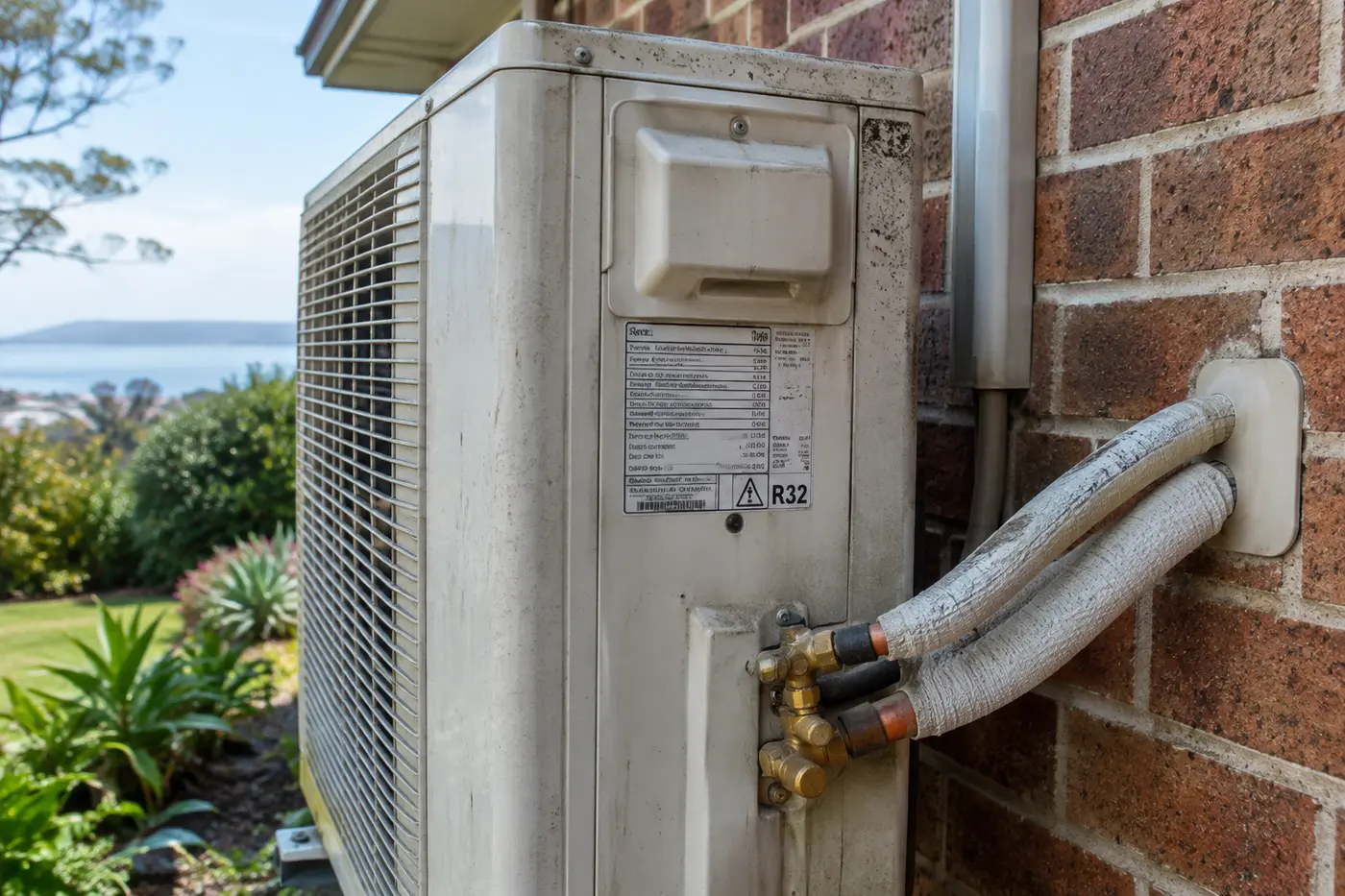
The rule is easy to remember: whatever gas is printed on the outdoor unit’s sticker is the gas that goes back in. If someone offers to “convert” your R410A system to R32 with a top-up, treat that as a red flag.
It’s also worth knowing that a system low on gas has a leak somewhere. Refrigerant doesn’t get used up like petrol. On the Coast, we often trace leaks back to salt air corroding the copper pipes and joints on outdoor units close to the water, from Umina Beach up to Norah Head. Fixing the leak first and then regassing is the only approach that lasts. Our breakdown of what a split system regas costs on the Central Coast explains how that process works.
Replacing a system? The gas is not the thing to shop on
Because nearly every new split system uses R32, the gas won’t really separate one quote from another. These things will:
- The right capacity for the room, based on its size, windows, insulation and which way it faces
- The energy rating label, which tells you more about running costs than the gas does
- Whether the old pipework can be reused or should be replaced
- How the outdoor unit will cope with salt air if you live near the beach
- Who installs it, and whether they pressure test and vacuum the system properly
The pipework question matters with the move from R410A to R32. Sometimes the existing copper lines can be reused if they’re the right size, in good condition and properly cleaned out. Sometimes they can’t, especially if they’re corroded or the new unit’s manufacturer says no. A good installer checks this on site rather than assuming either way.
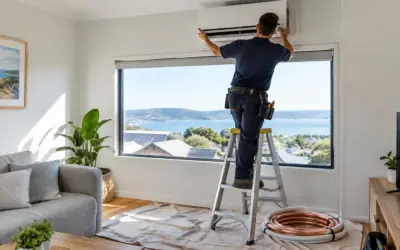
Our team has over 15 years of experience on the Central Coast, through the shift from older gases to R410A and now to R32. If you’re planning a replacement, our air conditioning installation service covers taking out the old unit, recovering its gas properly and fitting a new system sized for your home.
Common questions about R32 and R410A
Which is better, R32 or R410A?
For a new system, R32. It does the same job with less gas, has a far smaller climate impact if it leaks, and it’s what manufacturers now build around. That doesn’t make a healthy R410A system bad. It just means you wouldn’t choose R410A for a new install today.
Which AC gas is best for cooling?
The gas makes less difference to how cool your room gets than the system’s size, the quality of the install and how clean it’s kept. A correctly sized R410A unit will outperform an undersized R32 one. When comparing new systems, look at capacity and the energy rating rather than the refrigerant.
Is R32 being phased out?
No. R32 isn’t banned, and it’s still the standard gas in new split systems sold in Australia. It does sit under the broader HFC phase-down, and some newer models are starting to use alternatives such as R290 (propane), but buying an R32 system today is not a short-term decision.
What are the disadvantages of R32?
The main one is that it’s mildly flammable, so it has to be installed and repaired by licensed technicians following the right procedures. It also can’t be used to top up older R410A or R22 systems. For homeowners, neither of those is a reason to avoid it.
How do I know which gas my air conditioner uses?
Check the rating sticker on the side of the outdoor unit. It lists the refrigerant type and the factory charge. If the sticker has faded in the sun, the model number can usually be looked up, or a technician can tell you during a service.
Can I still get my R410A system regassed?
Yes. R410A is still available, and licensed technicians can recover, repair and recharge these systems. Just make sure the leak is found and fixed first, otherwise you’ll be paying for the same regas again.
Not sure what’s in your system?
If you’re replacing an older unit, or you’ve been told yours needs gas and you’re unsure whether it’s worth it, we’re happy to take a look and give you a straight answer. Talk to us about getting a new system installed properly from the start, and we’ll check what you have now before recommending anything.