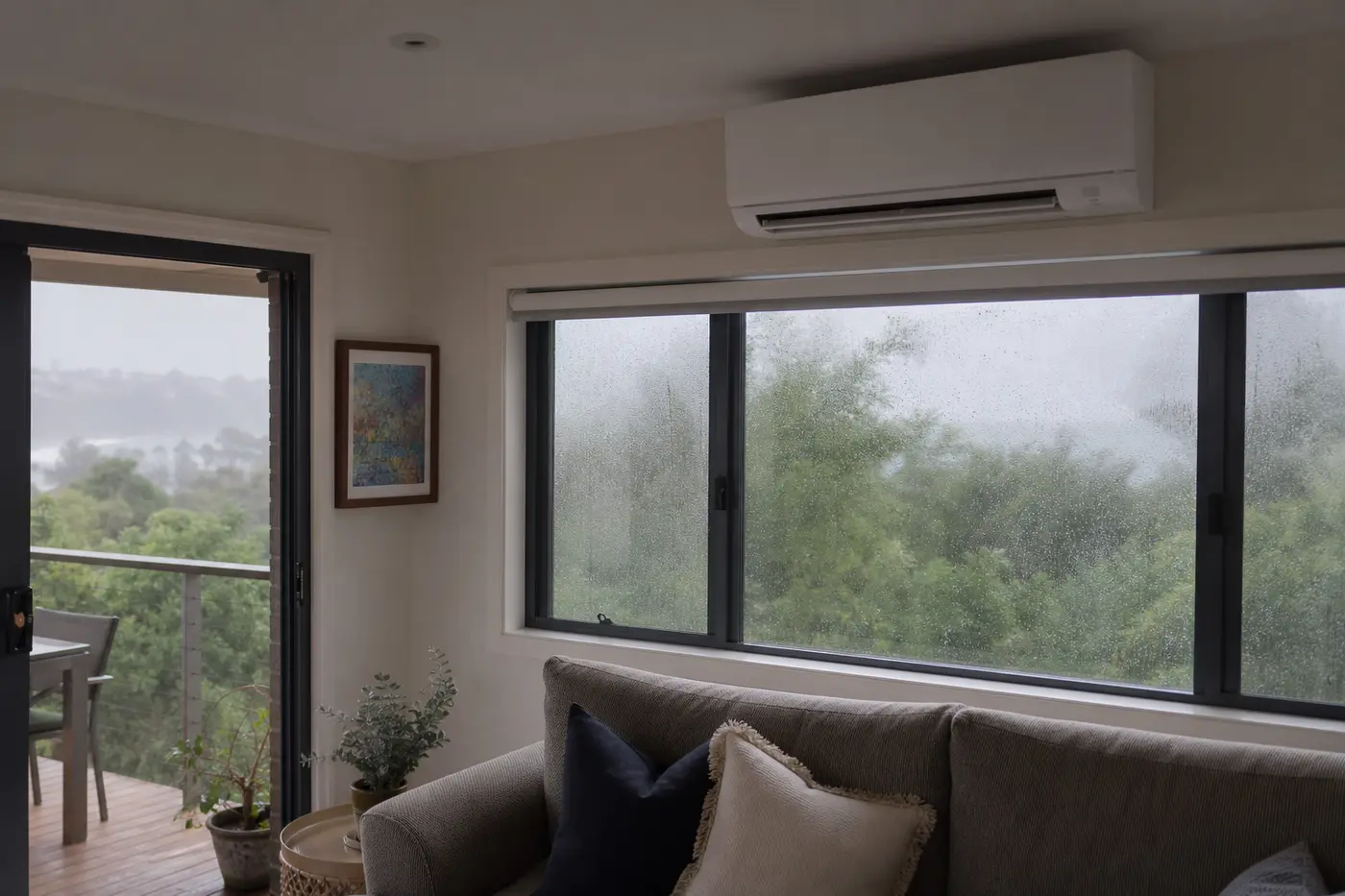
It is 8pm in February, the temperature has actually dropped to something reasonable, and yet the house still feels like a wet towel. You are not too hot. You are sticky. So you reach for the remote and drop the air conditioner to 19 degrees, which cools the room but does not really fix the clammy feeling, and in the morning your power bill has quietly gone up. If that sounds familiar, the setting you probably want is the air conditioner dry mode, and most people on the coast have never touched it.
We get asked about it constantly, usually by someone standing in a muggy lounge room wondering why cranking the temperature down did not help. Here is the honest rundown of what dry mode does, when it is worth using, and the one catch nobody mentions.
Dry mode chases moisture, not temperature
On the remote it is usually a water-drop symbol, sometimes just labelled “Dry”. When you switch to it, the unit slows the indoor fan right down and runs the compressor in short bursts. Warm, damp air passes slowly over the cold coil inside, the moisture condenses on that coil the same way water beads on a cold glass, and it drains away outside through the condensate line.
The key difference from normal cooling is what it is aiming at. Cool mode chases a temperature. Dry mode chases the moisture in the air and barely moves the temperature at all. So the room does not get cold, it gets less humid, and less humid air feels a lot more comfortable at the same reading on the thermostat. That is the whole trick.
When dry mode earns its keep here
The Central Coast has a particular kind of weather that dry mode was practically made for. Think of those overcast, close days after a summer storm, or a humid autumn evening where it is only 24 degrees but the air feels thick. You do not need to cool the house down. You need to pull the wet out of the air.
These are the moments we point people toward it:
- Muggy but mild days, where the temperature is fine but everything feels damp and sticky.
- The hours right after heavy rain, when the humidity spikes and the house feels stuffy.
- Spring and autumn, when you want to take the edge off without running full cooling.
What it is not for is a genuine heatwave. When it is 38 degrees outside and your living room is baking, dry mode will not keep up, because it is not really trying to cool the space. On those days, cool mode is the right tool. Dry mode is for comfort on the in-between days, and on the coast we get a lot of those.
Does it actually save power?
Usually, yes, and that is a fair reason to reach for it. Because the compressor runs in shorter bursts and the fan is turning slowly, dry mode generally draws less electricity than flat-out cooling. If you have been dropping the thermostat to fight a sticky feeling that was really about humidity, switching to dry mode on the right day can be gentler on the meter while leaving you more comfortable.
We would not oversell it, though. The savings depend on your unit, how humid it actually is, and how long you run it. It is not a magic setting that halves your bill. If you want the bigger picture on what your system costs to run day to day, we have broken that down in our guide to running costs for air conditioning on the Central Coast.
The catch nobody mentions
Here is the part that matters in our climate. Dry mode works by keeping a cold, wet coil inside your unit for extended periods. On a clean, well-maintained system that is completely fine. On a neglected one, that constant moisture is exactly the environment mould and bacteria love, and coastal air already pushes more dust, salt and spores into your indoor unit than an inland home would deal with.
So if you run dry mode a lot and start noticing a musty, damp smell when the unit kicks on, that is not the setting failing you. It is usually a sign the inside of the unit needs attention. We wrote a whole piece on where those musty AC smells come from if you want to read more. The fix is a proper clean rather than a stronger air freshener, and with over 15 years working on coast systems we can tell you the two go hand in hand. A yearly professional air conditioner clean keeps that coil and drain clear, which is what lets dry mode do its job without turning your unit into a mould trap.
Getting the most out of it
A few small habits make a real difference. Close the windows and external doors when dry mode is running, because there is no point pulling moisture out of the room while more damp air pours in from outside. Give it time to work, since it is a slow, gentle process rather than an instant blast. And keep an eye on the drain. If dry mode is doing its job, water should be steadily leaving the outdoor unit, and a puddle indoors means the condensate line needs looking at.
One honest limit worth knowing. Dry mode is a comfort setting on your air conditioner, not a substitute for a standalone dehumidifier in a genuinely damp room, a musty garage or a place with a real moisture problem in the walls. If your home stays damp no matter what the AC is doing, that is a different conversation, and worth having with someone before it turns into mould on the ceiling.
Straight answers about dry mode
When should you use dry mode on your AC?
Use it on humid but mild days, when the room feels sticky rather than genuinely hot. It is ideal after rain or on those close, overcast coastal afternoons. On a proper hot day, switch back to cool mode instead, because dry mode is not built to drop the temperature much.
Can I sleep with the AC on dry mode?
Yes, and a lot of people prefer it overnight. Because it removes the sticky feeling without making the room cold, dry mode often makes for more comfortable sleep on a humid night, and it usually runs quieter and cheaper than full cooling. Just make sure the room is not so cold that you end up reaching for a blanket.
How long should I leave the AC in dry mode?
A few hours is usually plenty to take the moisture out of a room. Running it non-stop for days does not help much once the humidity has come down, and it keeps that coil wet for longer than it needs to be. Use it when the air feels thick, then switch it off or back to fan once the room feels comfortable.
Is it cheaper to run the AC on dry mode?
Generally, yes. The slower fan and short compressor bursts mean it usually draws less power than full cooling. The exact saving depends on your unit and how humid it is, so treat it as a gentler option on mild days rather than a guaranteed way to slash your bill.
Is it okay to use dry mode all day?
It will not harm the unit, but it is rarely necessary. Once the room is comfortable, extra hours of dry mode do little except keep the coil damp. On a clean, serviced system that is no drama, but if yours is overdue for a clean, long stretches of dry mode can encourage that musty smell to build up.
What is the three-minute rule for air conditioners?
If you turn your air conditioner off, wait around three minutes before turning it back on. That short pause lets the pressure inside the compressor settle, and switching straight back on can strain or damage it over time. Most modern units protect against this automatically, but the habit is a good one either way.