Small Space, Big Comfort: Mastering Cooling in Central Coast Tiny Homes
The allure of tiny homes on the Central Coast of NSW is undeniable. As this region’s population grows and sustainable living gains momentum, compact dwellings are becoming a practical and popular choice for homeowners and investors alike. However, the Central Coast’s warm, often humid summers pose a unique challenge for maintaining cool, comfortable interiors without sacrificing precious floor space or aesthetic appeal.
Traditional bulky ducted air conditioning systems typically suited for larger homes are often impractical in tiny homes. Oversized or incorrectly sized equipment can lead to inefficient cooling, higher energy costs, and cluttered interiors. Thankfully, there’s a smarter way: space-saving air conditioning solutions designed specifically for compact living environments.
This comprehensive guide explores the nuances of cooling Central Coast tiny homes, focusing on key aspects such as compact and ducted micro systems, multi-split configurations, and practical coastal installation considerations. Central Coast homeowners and property investors will gain valuable insights into sizing and selecting appropriate air conditioning solutions that meet local standards, withstand salt spray and humidity, address noise concerns, and ultimately create a cool, comfortable living space year-round.
By understanding zoning, thermal loads, and equipment placement — alongside ensuring compliance with NSW standards — residents can enjoy the benefits of modern, quiet, and efficient air conditioning. Whether you’re building a new tiny home, renovating a caravan, or adapting an Airbnb property, tailored air conditioning installations from experienced local professionals will ensure you beat the heat without compromising your space or style.
Compact Cooling for Tiny Homes on the Central Coast
Assessing Layout, Zoning and Thermal Load
Effective cooling starts with understanding your tiny home’s layout, zoning needs, and thermal load. Even within compact spaces, the distribution of heat varies across living areas, sleeping nooks, and kitchenettes. To tailor your air conditioning system efficiently, start by measuring each usable zone — for example, a living area might be 15 square metres, the sleeping nook 5 square metres, and the kitchenette 5 square metres, forming a 25 m² footprint.
Next, identify heat sources within each zone. These include direct sunlight through large windows or skylights, heat emitted from appliances like microwaves or cooktops, and human occupancy. The Central Coast’s sunny climate means rooms exposed to northern façades or with insufficient shading are particularly prone to heat buildup.
Using zoning, you can control cooling precisely where it’s needed rather than overcooling the entire space. For instance, the kitchenette may require minimal cooling compared to the living area, especially during off-hours. Estimating cooling loads can be simplified by applying a rule of thumb: a well-insulated area on the Central Coast requires roughly 60–100 watts per square metre, but sun-exposed zones or those with heavy appliance use may require greater capacity.
Smart thermostats or separate controllers allow users to maintain different temperatures in the living space and sleeping areas—a crucial comfort factor for tiny homes. This approach also aligns with energy-efficiency goals by avoiding wasted cooling in unoccupied zones.
When planning your cooling system, consider NSW’s Building Code of Australia (BCA) energy provisions which include requirements for insulation and ventilation in new-builds or renovations. Look for units meeting minimum energy performance standards (MEPS) and consider licensed installers familiar with local humidity patterns to ensure optimal sizing and zoning.
Selecting Compact Equipment: Size, Weight, Noise
Choosing the right air conditioning equipment means balancing performance with size and noise constraints. In tiny homes, equipment must be compact and light enough to fit into small wall spaces or ceiling voids without structural modifications. Inverter-driven heat pump technology is ideal for tiny homes because it provides variable cooling capacity, maximises energy efficiency, and maintains stable temperatures without frequent on-off cycling.
Indoor units should be specially selected to keep noise levels below 30 dB in bedrooms, avoiding disturbance during sleep, and between 40–50 dB in living areas to ensure comfort without distraction. Outdoor units with enhanced salt-spray protection coatings are essential on the Central Coast to resist coastal corrosion and extend equipment lifespan. Weight considerations affect mounting choices — heavier units may require reinforced walls or ceilings and specialised hardware.
Popular brands with proven reliability in Australia’s coastal climates include Mitsubishi Electric, Fujitsu, Daikin, and Panasonic. These manufacturers offer models that comply with MEPS requirements and provide solid warranties suitable for Central Coast conditions.
Space-saving configurations like slimline wall-mounted units or ceiling-mounted options can blend discreetly within your interior design. For those willing to invest more, compact ducted systems or ductless mini-splits both offer effective cooling solutions depending on your space and aesthetic preferences.
Placement and Aesthetics: Where to Put It in a Tiny Home
Strategic placement of air conditioning units is essential in tiny homes where every centimetre matters. Ideally, indoor units should be installed where airflow can be evenly distributed, such as centrally located on a wall or in a ceiling cassette position that avoids obstructive ductwork or bulky jumpers.
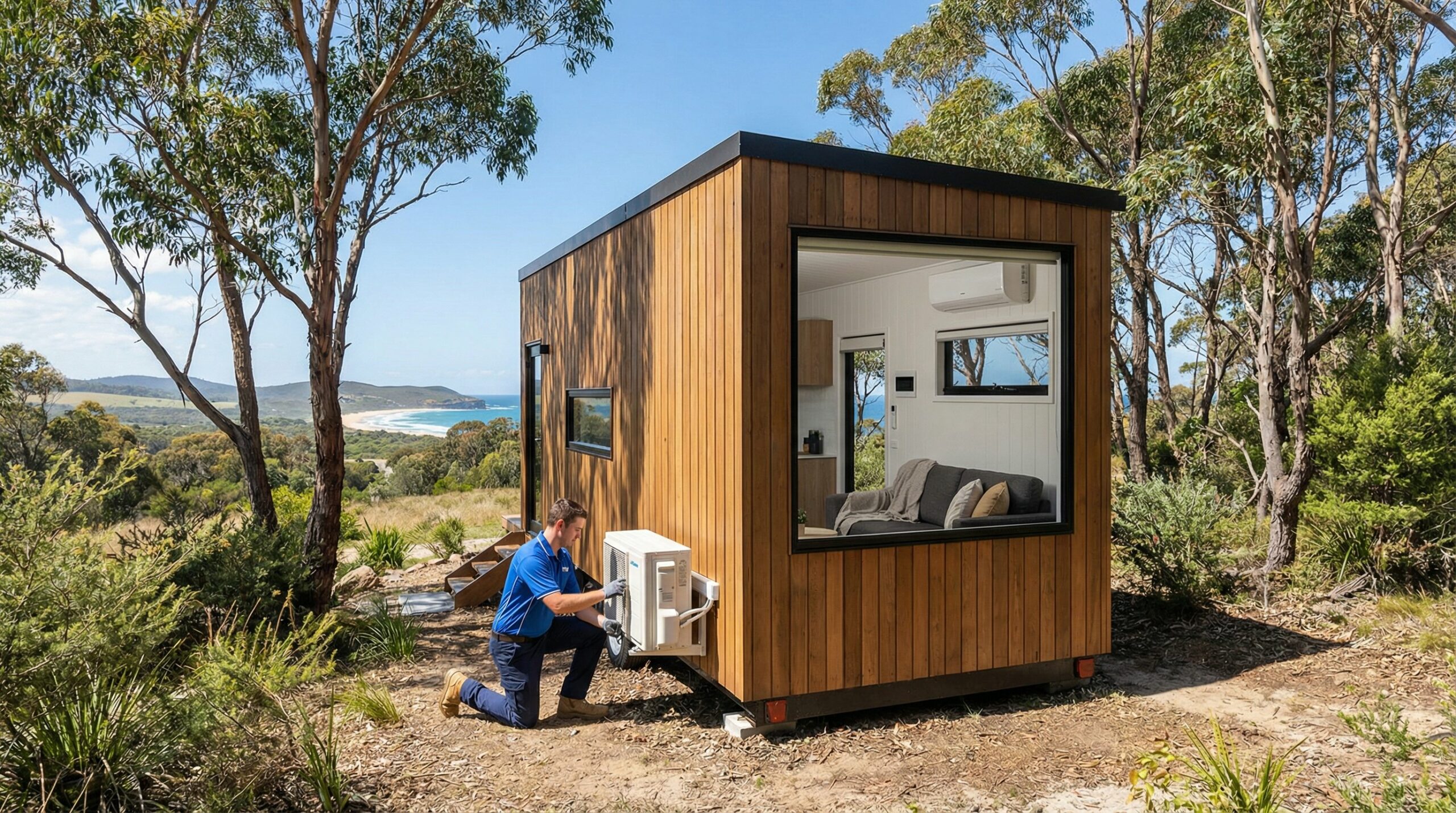
Outdoor units should be positioned away from bedrooms to minimise perceived noise, preferably under shade or eaves for protection against harsh weather and direct sunlight. Coastal homes additionally require shielding from salt spray and strong winds, which can accelerate corrosion and reduce efficiency.
Ductwork, if used, needs to be minimal and as unobtrusive as possible. Concealing indoor units with decorative grilles or cabinetry can help them blend into interior features without compromising airflow. Outdoor units can also be concealed with ventilated screens or integrated into garden landscaping, provided adequate ventilation is maintained.
When installing or renovating on the Central Coast, it’s critical to plan placements in line with local building regulations and obstruction guidelines to comply with ventilation and safety requirements while meeting your design standards.
Split Systems vs Ducted Micro: Making the Right Choice for Small Footprints
How Ducted Micro Systems Fit Tiny Homes
Ducted micro systems are a highly efficient way to deliver air conditioning in compact homes. Unlike traditional large ducted systems, these micro versions use a single outdoor compressor unit paired with smaller, well-sealed ducts or plenums to distribute conditioned air to multiple microzones within the home.
The advantages of ducted micro systems include creating a seamless interior aesthetic without visible indoor units and the ability to cool an open-plan layout uniformly. This helps in tiny homes where space for wall-mounted units or multiple heads is limited.
However, ducted micros come with trade-offs. Initial installation costs tend to be higher due to ductwork and extended labour. Zoning options may be less flexible compared to multi-split systems unless zone dampers add complexity—and proper duct sealing is essential to avoid energy losses and maintain system efficiency.
For open-plan tiny homes around 30–45 square metres, a ducted micro system can be the perfect balance of comfort, discrete installation, and efficient space use, especially when paired with robust insulation and shading.
Leading brands like Fujitsu and Mitsubishi Electric offer coastal protection variants of ducted mini systems that suit the environmental conditions of locations such as the Central Coast. Installation also needs to comply with the National Construction Code (NCC) energy efficiency provisions, for which licensed professionals are best suited.
When to Choose a Split or Multi-Split System
Split systems remain the most common cooling solution for tiny homes due to their relative simplicity and lower upfront cost. A single split system works well where there’s only one main zone—like an open plan studio or a well-connected living and sleeping area under the one roof.
Multi-split systems, which allow one outdoor unit to serve two or more indoor heads in separate zones, offer flexibility and zone control for homes with distinct spaces like separate bedrooms and living rooms. This zoning reduces energy use by cooling areas only when occupied and provides peace and temperature customisation, critical in small homes with varying activity patterns.
Future-proofing is another consideration; if you anticipate adding rooms or reconfiguring the layout, a multi-split system provides adaptability by allowing additional indoor units without installing multiple outdoor compressors.
For Central Coast homes, ensure that any multi-split system is sized correctly—taking into account insulation, local climate, and humidity levels—to maximise comfort and efficiency. Additionally, check that warranties cover multi-head configurations and that your installer is experienced in their installation and servicing.
Aesthetic and Practical Considerations
Aesthetics in a tiny home are paramount. Indoor heads should be discreet, with slimline profiles and neutral colours that suit the interior décor. Careful planning of wiring and piping routes ensures an uncluttered look. Accessibility for routine maintenance is equally important to avoid costly or disruptive repairs down the line.
Outdoor units may require screening to meet noise regulations or community aesthetics, using ventilated aluminium housings or natural landscaping. Coastal locations call for coatings, sacrificial anodes, and directionally protected positioning to minimise the corrosive effects of salt air.
Local installers from the Central Coast often provide valuable advice on blending equipment seamlessly into your home design while accounting for the harsh maritime environment. By working closely with professionals, homeowners can enjoy efficient, quiet air conditioning systems that complement their tiny homes internally and externally.
Smart, Multi-Head Comfort: Multi-Head Solutions for Central Coast Tiny Homes
Understanding Multi-Split Configurations
Multi-split air conditioning systems are a sophisticated but practical choice for tiny homes, combining multiple indoor units connected to a single outdoor unit. This setup feeds several zones with independent control, optimising comfort and energy use.
Each indoor head can operate independently, enabling you to set varying temperatures according to usage patterns or occupant preferences. This flexibility is especially useful in homes where one zone is occupied during the day (e.g., kitchen/living room) and another at night (e.g., bedroom).
Effectively piping refrigerant over short distances within tiny homes keeps efficiency high, and careful design minimises pressure losses. Suitable multi-split systems can serve anywhere from 2 to 5 indoor units, perfect for homes between 25 to 45 square metres seeking discreet cooling without extra outdoor units.
Choose models designed for multi-head applications, ensuring all units meet MEPS and STAR ratings pertinent to NSW’s climate. Selecting reputable brands with local Central Coast service availability also ensures quick maintenance if needed.
Zoning, Controllers and Convenience
The convenience of multi-head systems lies in their zoning capabilities. Individual remotes or wall-mounted controllers allow room-by-room temperature adjustment. Many modern systems also integrate smart controls via smartphone apps or smart home hubs, enabling remote access and customised scheduling.
Occupancy sensors and eco modes further enhance efficiency by automatically adjusting temperatures when rooms are unoccupied. On the Central Coast, this means your system won’t waste energy cooling empty spaces during the day or at night, an important consideration given rising energy costs.
Programming your system to cool living areas in the afternoon and bedrooms at night maximises comfort while managing electricity usage effectively. Smart thermostats compatible with regional platforms give an added layer of control that benefits multi-zone tiny homes.
Noise, Efficiency and Coastal Environment
Coastal conditions on the Central Coast impact outdoor units more than other locations. Salt spray accelerates corrosion, while sea breezes can increase noise transmission. Selecting outdoor units with enhanced coatings, deflectors, and vibration dampeners reduces wear and sound emission.
Placing outdoor units away from bedrooms and living areas — possibly near a shaded side yard or under a protective eave — addresses noise concerns without compromising efficiency. Regular cleaning of outdoor coils and preventive maintenance counters salt build-up that can inhibit heat exchange.
Wind exposure should also factor into placement decisions, as shielding the unit can lower running costs by maintaining optimal operating temperatures during hot weather. Always opt for professional installation attentive to coastal specifics for durable and efficient operation.
Heating Central Coast: All-Season Comfort in Compact Homes
Integrating Heating with Cooling
While the Central Coast boasts a temperate climate, winter months still demand effective heating solutions in tiny homes. Reverse-cycle systems combine heating and cooling in one unit, providing an efficient all-season climate control option.
Modern inverter heat pumps modulate output to maintain consistent indoor temperatures, avoiding the cold spikes or hot spots that can be uncomfortable in small spaces. Additionally, these systems can regulate humidity levels, an essential feature in the humid coastal environment to reduce mould risk and improve indoor air quality year-round.
Open-plan layouts benefit from well-placed indoor heads ensuring even temperature distribution that maintains comfort throughout the tiny home. Selecting units rated for coastal humidity and variable temperatures helps extend your system’s lifespan and enhance performance.
Electric vs Gas Heating in Tiny Homes
Electric heat pumps dominate in tiny homes due to their compact footprint, simpler installation, and safety profile. There’s no need for venting or gas connections, which can be cumbersome and space-consuming. Electric systems also align with renewable energy goals and are compatible with solar power setups common on the Central Coast.
Gas heating, while often delivering immediate heat, requires adequate ventilation, gas lines, and larger appliances that can intrude into tight living areas. Additionally, fluctuating gas prices and evolving energy policies in NSW may affect running costs and long-term viability.
Evaluating your site’s infrastructure, energy tariffs, and lifestyle needs will guide the choice. Hybrid approaches may be suitable if gas is already available, combining electric heat pumps with gas boosting during peak demand, but require careful planning and regulatory compliance.
Seasonal Thermostat Programming
Programming your heating and cooling system to match seasonal variations and occupancy patterns improves comfort and trims energy bills. On the Central Coast, setting weekday and weekend schedules reflects typical occupancy, avoiding unnecessary operation when the home is empty.
Implementing humidity control modes during warm, humid months and scheduling “eco” modes for cooler periods ensures balanced air quality while preventing overuse. For example, a night setback mode in summer reduces cooling slightly to save energy without sacrificing comfort.
Using local climate data to guide thermostat settings and incorporating “away” or “vacation” modes helps meet energy-efficiency goals. Many modern systems enable remote adjustment, ensuring you control comfort even when off-site.
Installation Essentials on the Central Coast: Regulations, Contractors, and Compliance
Choosing a NSW-Qualified Installer
Ensuring your tiny home’s air conditioning is installed by a licensed professional is vital for safety, compliance, and equipment longevity. In NSW, only technicians with valid ARC (Australian Refrigeration Council) licences should perform refrigeration work.
Seek installers who have proven experience working with tiny homes and understand Central Coast conditions, including exposure to humidity and coastal corrosion. Reading reviews from local homeowners can provide insights into workmanship and reliability.
Always verify licence numbers with NSW Fair Trading, demand on-site workmanship warranties, and confirm whether installation permits are required by your local council. A qualified installer will guide you on equipment selection, placement, and adhere to energy provisions and building codes.
Regulations, Standards and Paperwork
The installation of air conditioning systems is governed by standards to protect consumers and promote energy efficiency. In Australia, the Mandatory Energy Performance Standards (MEPS) sets minimum efficiency benchmarks for room air conditioners and split systems, enforced at the point of sale and installation.
The National Construction Code (NCC) includes energy efficiency provisions relevant to new buildings and major renovations, often requiring documentation proving compliance. Installation paperwork usually includes compliance certificates, warranty documentation, and service manuals.
Following these regulations ensures your system performs reliably, saves energy, and maintains eligibility for manufacturer warranties. Licensed installers are responsible for ensuring that all regulations are met, easing the process for homeowners.
Ductwork, Ventilation and Coastal Conditions
Ducted tiny homes need attentive design to maximise airflow and minimise losses. Airtight sealing of ducts prevents energy waste and improves cooling efficiency. Condensation management is critical, as poor design can cause moisture damage and mould growth, especially in coastal humidity.
Materials resistant to corrosion, like galvanised or aluminium ducts with protective coatings, extend system lifespans near the sea. External vents and weather seals are necessary to protect ducts from salt air and rain ingress.
Professional installers ensure ducts and ventilation comply with Australian standards, factoring in local expectations for Coastal NSW as set by building authorities. Regular inspections and maintenance prevent performance deterioration due to the harsh maritime environment.
Energy Efficiency and Cost-Saving Hacks for Tiny Homes
Inverters, SEER and Australian Standards
Inverter compressor technology is a game-changer for tiny homes, allowing systems to regulate cooling output precisely according to demand. This reduces short cycling, saving energy and reducing wear on components.
SEER (Seasonal Energy Efficiency Ratio) or SCOP (Seasonal Coefficient of Performance) ratings indicate how energy efficient a system is over the year. Choosing units with high SEER/STARR ratings (3–5 stars) ensures lower running costs and better environmental outcomes.
When comparing models, focus not only on cooling capacity but also on energy use in standby mode and seasonal operation. Brands offering comprehensive warranties and efficient service networks on the Central Coast provide additional value.
Solar Pairing and Battery Readiness
Many tiny homes on the Central Coast incorporate rooftop solar systems to complement energy needs. Air conditioners can be significant energy users, so pairing them with solar panels can reduce grid dependency and electricity bills.
Battery storage adds flexibility by shifting consumption away from peak tariffs and enabling overnight use of stored solar energy. Select air conditioning systems that are compatible with smart inverters and can integrate with battery management systems.
Design your power system to align peak cooling times, typically afternoon sun exposure, with solar generation to maximise savings. Local NSW incentives and rebates also support solar uptake, making this a financially and environmentally smart choice.
Smart Controls and Scheduling
Smart thermostats and scheduling tools contribute significantly to energy efficiency in tiny homes. Occupancy sensors automatically adjust HVAC operation based on room use, while geofencing can switch systems off or on depending on your phone’s location.
Remote monitoring lets you adjust settings from anywhere, ensuring the system isn’t running unnecessarily. Programming “away” modes and humidity control algorithms maintains comfort while minimising energy waste.
Compatibility with Australian smart home ecosystems and servicing availability on the Central Coast ensures your system remains optimised and easy to maintain.
Real-Life Central Coast Tiny Home Cases
Case Study A: Coastal Studio (≈25 m2)
This coastal studio home of approximately 25 square metres uses a two-head mini-split system to deliver efficient zoning. The indoor units are strategically placed in the living and sleeping areas, allowing occupants to cool or heat zones independently.
The outdoor compressor unit sits under an eave on the shaded side, protected from wind and salt spray, extending its lifespan. Noise levels remain low, with indoor units operating around 28 dB in bedrooms. During peak summer months, the system runs approximately 5–6 hours daily, maintaining consistent comfort.
Installation costs fall within typical ranges for mini-split systems suitable for this size, with energy use optimised via smart thermostats. Local Central Coast installers supplied and installed the system under full warranty, ensuring ongoing support for the homeowner.
Case Study B: 35 m2 Airbnb Tiny Home with Multi-Split
An Airbnb property featuring a 35 square metre tiny home utilised a multi-split system with three indoor heads to cover the living, kitchenette, and bedroom zones. This allows hosts to tailor temperature controls according to guest preferences and occupancy.
Remote monitoring and scheduling features ensure the home conserves energy between bookings while maintaining humidity control during wet periods. Regular maintenance contracts via a local Central Coast service provider keep the system in top condition, vital for rental properties.
The approach ensures guest comfort while tracking energy consumption effectively. Installation complied with short-stay rental regulations, a key consideration for NSW Airbnb hosts.
Case Study C: Renovated Caravan to Tiny Home
A converted caravan turned tiny home employed a wall-mounted split system designed for compact spaces. The outdoor unit was mounted on an extendable bracket to reduce salt air exposure during coastal stays.
This setup balanced ease of movement with fixed cooling comfort. Lightweight unit selection allowed installation within stringent structural limits, typical for caravan conversions.
Maintenance focused on regular salt spray cleansing and system checks, critical given the caravan’s exposure to harsh coastal environmental conditions. The installation took a few days and fit within a modest budget, proving an economical solution for mobile coastal living.
Maintenance, Warranties and Longevity in Central Coast Conditions
Maintenance Checklist and Scheduling
Maintaining air conditioning units in Central Coast tiny homes requires regular attention to preserve efficiency and longevity. Key tasks include:
- Cleaning or replacing filters every 1–3 months to maintain airflow and air quality.
- Inspecting and cleaning indoor coils and drain pans pre- and post-summer.
- Ensuring outdoor units are free from debris, vegetation, and salt deposits.
- Checking condensate drainage systems for blockages to avoid water damage.
- Washing outdoor coils with fresh water periodically to remove salt build-up.
Setting calendar reminders or using smart home alerts helps adhere to these schedules and keeps the system running smoothly throughout the year.
Warranty and Local Support
Understanding warranty terms is crucial, especially for coastal installations where wear may be accelerated. Most manufacturers require routine servicing by licensed technicians to keep warranties valid.
Local Central Coast service providers offer on-site support, emergency repairs, and maintenance contracts tailored to coastal homes. Establishing a relationship with such providers ensures swift responses to any issues and adherence to maintenance schedules.
Request maintenance documentation from your installer and clarify which conditions are covered, especially those relating to coastal corrosion.
Cost of Ownership and ROI
When budgeting for air conditioning in tiny homes, consider upfront installation costs alongside ongoing running expenses. Mini-split systems generally cost less to install than ducted micro systems but may have different running costs depending on zoning and efficiency.
Annual energy consumption varies with household usage, climate, and system efficiency but can be significantly reduced through inverter technology and smart controls. Adding solar power can shorten payback times substantially.
Considering long-term serviceability and warranty support from local Central Coast providers adds value and peace of mind, making the investment in an efficient, durable system worthwhile.
Step Into Comfortable Tiny Living: Your Central Coast A/C Action Plan
Creating a cool, comfortable tiny home on the Central Coast is entirely achievable with thoughtful planning and the right air conditioning solutions. Begin by assessing your home’s layout and zoning needs, mapping out where cooling is essential. Choose space-saving systems — whether compact split systems, ducted micro options, or multi-split configurations — that fit your lifestyle and footprint without sacrificing design integrity.
Pay close attention to installation details that protect equipment against the coastal environment, including corrosion-resistant outdoor units shielded from salt spray and noise. Integrate heating central coast residents trust for year-round comfort, utilising reverse-cycle heat pumps where possible. Smart thermostats and scheduling can further enhance your system’s efficiency, while solar and battery readiness provide long-term savings and sustainability.
Work with a NSW-qualified installer experienced in tiny home and coastal installations to ensure compliance with local standards, building codes, and our services that match your needs. For more details on professional and tailored setups, contact Air Conditioning Central Coast — they offer on-site assessments, customised solutions, and licensed installations designed specifically for the Central Coast’s unique climate and living environments.
Embark on your tiny home comfort journey today and enjoy a refreshing living space no matter the season or weather.
For further guidance on selection and installation, consider resources such as the Australian Government’s Department of Industry, Science, Energy and Resources which offers industry-wide insights into energy efficiency and appliance standards.