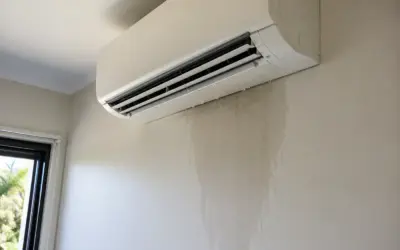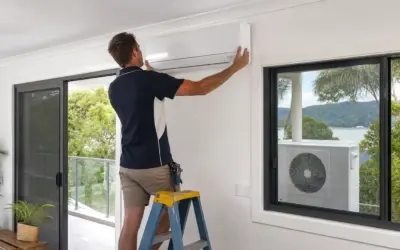
It usually starts with one more breakdown. The unit that limped through last summer is now blowing warm air, the callout is already booked, and you are standing in the hallway wondering if you are about to pour good money into a system that is on its way out. Deciding whether to repair or replace your air conditioner is one of the trickier calls a homeowner makes, mostly because the honest answer is that it depends. After more than 15 years working on Central Coast homes, we can usually tell within a few minutes which way a unit is likely to go. Here is how we think it through, so you can weigh it up before the technician even knocks.
Start with the age, because it decides most of this
Most split systems and ducted units last somewhere between 10 and 15 years with reasonable care. That is the single biggest factor. If your system is under eight years old and it throws a fault, a repair is almost always the sensible move. Parts are still available, the unit has years left in it, and one failure is not a pattern.
Once a system pushes past 12 years, the sums change. Even a cheap repair on an old unit is money spent on something that is close to retirement anyway. On the coast we tend to see units age a little faster than the manufacturer’s figures suggest, because salt in the air quietly eats away at the outdoor coil. A 12-year-old unit in Terrigal or Umina Beach has often had a harder life than the same model sitting inland.
The repair-versus-replace maths most people skip
There are two rules of thumb worth knowing. The first is the age-times-cost check: multiply the age of the unit in years by the cost of the quoted repair. If the number climbs past roughly $5,000, replacing usually makes more sense than fixing. So a $600 repair on an eight-year-old unit ($4,800) is borderline but often worth it, while the same $600 repair on a 12-year-old unit ($7,200) is money you will likely spend again soon.
The second is simpler. If a single repair costs more than about half of what a new system would, replace it. A compressor or a major refrigerant leak can easily hit that mark. A blown capacitor or a faulty sensor will not come close, and those are the repairs we are happy to do all day.
Signs the fixing has quietly become a money pit
One breakdown is bad luck. A run of them is your unit telling you something. These are the patterns that make us lean towards a new system rather than another patch job:
- Repeat callouts every season. If you have paid for two or three different faults in the space of a year or two, the next one is rarely the last.
- Power bills creeping up for no reason. An ageing, struggling unit draws more electricity to do less cooling. Sometimes the running cost alone justifies the change, and it is worth reading up on the real cost of running air conditioning on the Coast before you decide.
- Warm air or rooms that never quite cool. When the whole house sits a few degrees warmer than the setting no matter what you do, the system is losing its capacity.
- Old refrigerant. Units that still run on the older R22 gas are getting expensive and awkward to service, because that gas has been phased out.
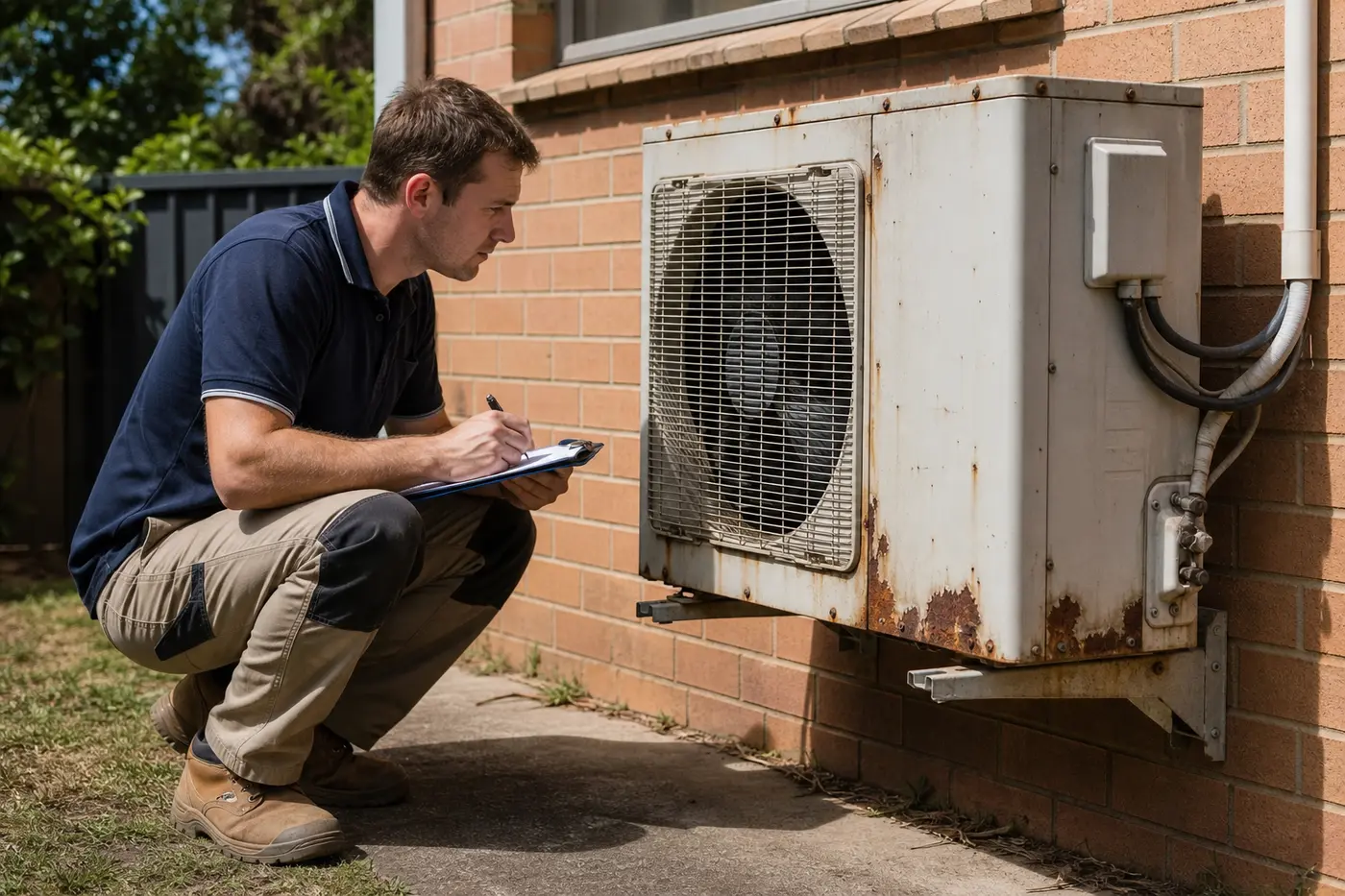
- Rust and corrosion on the outdoor unit. Once the cabinet and coil start to go, you are fighting the salt air, and the salt air usually wins.
When a repair is still the right call
Plenty of the time we turn up and tell people to keep their unit. If the system is relatively young, the fault is a single clear thing, and the part is common, fixing it is the cheaper and greener choice. A unit that has been looked after also tends to reward you for it. Regular servicing genuinely extends the life of a system, and a well-maintained ten-year-old can outlast a neglected seven-year-old. If yours has never had a proper service, that is worth sorting before you write it off. Our guide to getting a longer life out of your AC covers what actually makes a difference.
Warranty matters here too. If the unit is still covered by the manufacturer and you have kept up the servicing, a repair might cost you very little. Always check that before you agree to anything.
What a new system actually buys you
Replacing feels like the expensive option in the moment, and it is a real outlay. What softens it is what you get back. A modern inverter unit sips power compared to a fifteen-year-old machine, so the gap in your bills starts closing from day one. Newer systems run quieter, hold temperature more steadily, and most reverse-cycle models heat the house through winter as well as cool it in summer, which matters more on the Coast than people expect.
There is also the simple relief of a fresh warranty and a unit that will not surprise you on the hottest day of the year. If you are weighing it up, our team can talk you through a like-for-like air conditioning installation and give you an honest read on whether an upgrade pays for itself in your home.
Why coastal homes wear systems out faster
This one surprises people. The same unit that would last 15 years in western Sydney might give you 10 or 12 near the water. Salt-laden air corrodes the aluminium fins and the metal cabinet of the outdoor unit, and it does it slowly enough that you do not notice until the efficiency has dropped off. Homes in places like Ettalong Beach, The Entrance and Avoca Beach feel this most. It does not mean you need to replace early, but it does mean age is a firmer guide here than the brochure suggests, and a rinse-down and service before each summer buys you real time.
Common questions about repairing or replacing an AC
What is the $5,000 rule for air conditioners?
It is a quick sanity check, not a law. You multiply the unit’s age in years by the cost of the repair quote. If the answer is more than about $5,000, replacing the system usually works out better value than repairing it. It captures the fact that a repair on an old unit is worth far less than the same repair on a new one.
How do I know if my air conditioner needs replacing?
The strongest signals are age past 12 years, repeated breakdowns across recent seasons, rising power bills, and a repair quote worth more than half a new system. Any one of those on its own might not decide it. Two or three together almost always point to replacement.
Is it worth fixing a 20-year-old air conditioner?
Rarely. At 20 years a unit is well past its expected life, likely runs on phased-out refrigerant, and will be costing you noticeably more to run than a modern equivalent. Unless the fix is tiny and you only need it to last one more season, the money is better put towards a new system.
How long do air conditioners last?
Most residential systems last 10 to 15 years. Regular servicing pushes you towards the top of that range, and neglect drags you to the bottom. On the coast, plan for the shorter end because of salt air on the outdoor unit.
How long do reverse cycle air conditioners last?
About the same, 10 to 15 years, because a reverse-cycle system is the same hardware doing double duty for heating and cooling. Because it works year round rather than just over summer, keeping up with servicing matters even more.
Should I replace before summer or wait until it breaks?
If your unit is clearly on borrowed time, replacing before the peak of summer is far less stressful than doing it in a heatwave when everyone else is calling too. Booking in spring or early autumn means you are not without cooling, and you have time to choose the right system rather than grabbing whatever is available fastest.