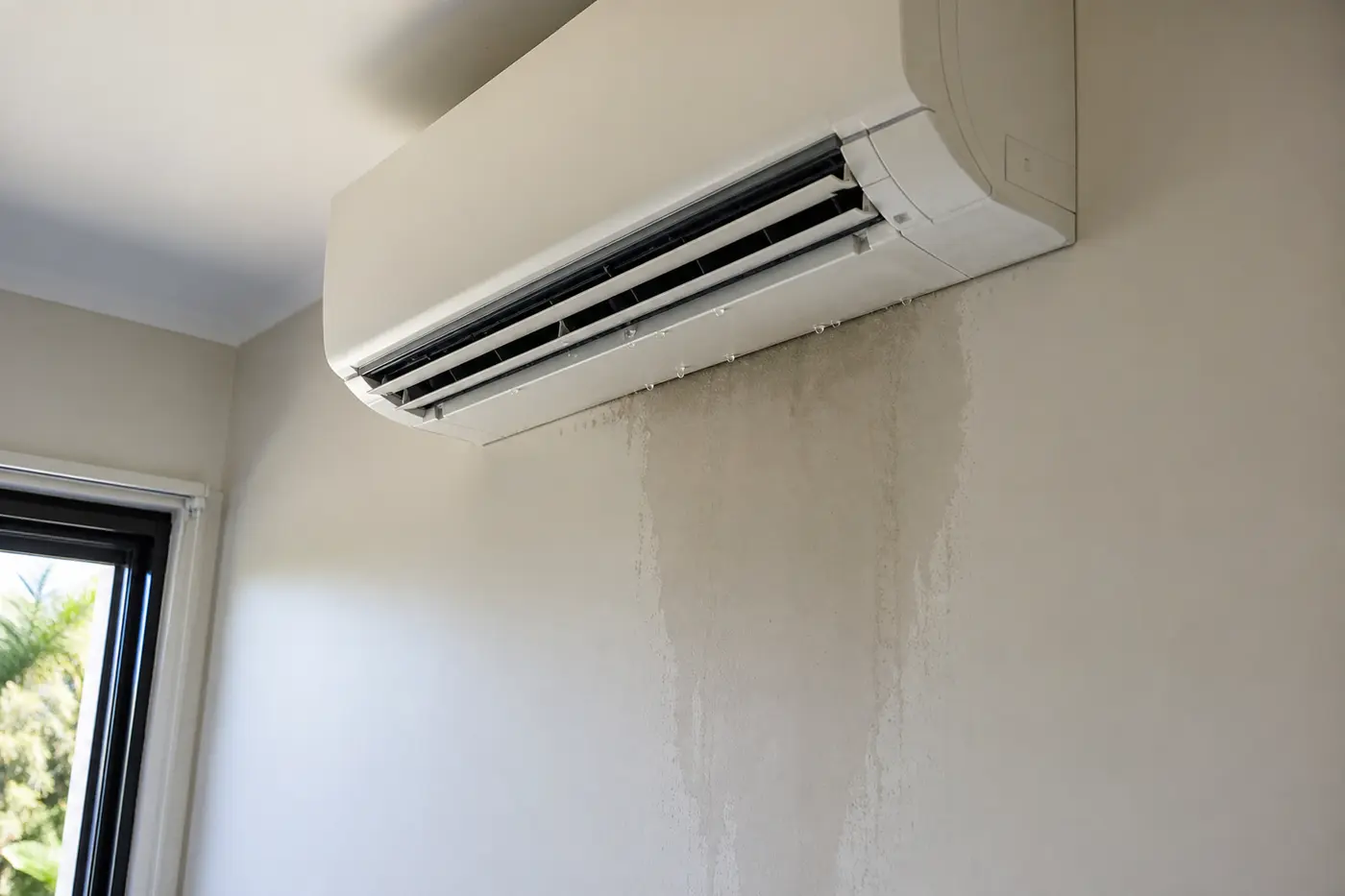
You walk into the lounge on a warm afternoon and there’s a wet patch spreading down the wall under the indoor unit, or a small puddle forming on the floorboards. An air conditioner leaking water is one of the more common calls we get across the Central Coast, and it almost always picks up through summer when systems are running hardest. The good news is that most leaks come down to a handful of causes, and a few of them are simple. The bad news is that ignoring one can turn a $200 fix into water-damaged plaster.
Here’s what’s actually going on when water starts appearing where it shouldn’t, what’s safe to check yourself, and when it’s worth picking up the phone.
First, is it actually a leak?
Your air conditioner makes water on purpose. As warm, humid air passes over the cold indoor coil, moisture condenses out of it, the same way a cold drink sweats on a summer day. That water is meant to collect in a tray under the coil and run out through a drain pipe to the outside. On a muggy Central Coast day a healthy split system can pull litres of water out of the air, and you’ll often see it trickling out of the drain pipe outdoors. That part is normal.
It becomes a problem when the water shows up somewhere it shouldn’t: dripping from the front of the indoor unit, running down the wall, or pooling on the floor inside. That means the water isn’t getting to the drain, and it’s backing up instead.
Why split systems start dripping inside
Nearly every indoor leak we attend traces back to one of these:
- A blocked drain line. This is the big one. Over months and years, dust, mould and a slimy algae-like sludge build up inside the thin drain pipe until water can’t get through. It backs up into the tray, overflows, and comes out the front of the unit. Our coastal humidity makes that build-up faster than most people expect.
- A dirty filter or coil. When the filter clogs, airflow drops and the coil can get so cold it ices over. When that ice melts, usually when the unit switches off, it dumps more water than the tray can cope with.
- A cracked or rusted drip tray. The tray under the coil can corrode or crack with age, so water escapes before it ever reaches the drain.
- A poor install slope. The indoor unit and its drain need a slight fall so water runs the right way. If it was mounted a touch off level, water sits and eventually spills. We see this on units that leaked from day one.
- Low refrigerant. If the system is short on gas, the coil can freeze for the same reason a dirty filter causes it, then leak as it thaws. This one needs a licensed technician.
The two checks worth doing before you call anyone
There are a couple of safe things a homeowner can do first, and they solve a fair share of leaks on their own.
Turn the unit off at the remote and, if water is dripping near the electrical side, switch it off at the wall too. Water and electronics are a bad mix, and running a leaking unit hard only pushes more water out. Then pop the front cover on the indoor unit and pull out the filters. If they’re grey with dust, wash them under the tap, let them dry fully, and slot them back in. A clogged filter is behind a surprising number of leaks, and it’s the one thing genuinely worth a DIY look.
Beyond that, we’d stop. Clearing a blocked drain line, checking the tray, or touching refrigerant means opening up the unit and using tools that can crack the coil or void your warranty if it goes wrong. That’s where a technician earns their keep.
Water pooling outside is usually fine
If the water is coming from the outdoor unit or the drain pipe on the wall outside, take a breath. That’s often just the condensation doing its job and draining where it should. It’s worth a quick check that the pipe outlet isn’t blocked by leaves or a wasp nest, and that the water is running away from the house rather than pooling against a footing. A steady drip outside on a humid day is normal. A flood inside is not.
Why a small leak is worth sorting quickly
A leaking air conditioner rarely fixes itself, and the damage adds up quietly. Water running down a wall soaks into plaster and skirting, and on the Central Coast that damp sits and breeds mould fast. We’ve pulled apart units where a blocked drain had been overflowing for weeks, feeding mould growing right through the inside of the unit, which then blows spores into the air you breathe. There’s an electrical risk too if water reaches the board. None of that is worth the wait for the sake of a straightforward repair.
How we stop it happening again
Most leaks we clear come back within a year or two if the underlying build-up isn’t dealt with properly, because the drain simply silts up again. A thorough professional air conditioner clean flushes the drain line, clears the tray, and sanitises the coil and filters so water flows the way it’s meant to. With over 15 years working on Central Coast systems, from Erina to Umina Beach, we know how quickly the coastal air clogs these units, and we treat the cause rather than just mopping up the symptom.
The cheapest fix of all is not needing one. Keeping up with regular servicing, roughly once a year, catches a silting drain and a tired tray long before they turn into a wet ceiling. If you use your system daily or you’re near the water, once a year is the minimum we’d suggest.
Common questions about a leaking air conditioner
Can I still use my air conditioner if it’s leaking water?
It’s best to switch it off. Running a leaking unit pushes more water out and, if the leak is near the electrical parts, it becomes a safety risk. Turn it off, do the quick filter check, and if the leak continues, leave it off until it’s looked at.
Should I be worried if my AC is leaking water?
A little water dripping from the outdoor pipe is normal condensation and nothing to worry about. Water leaking inside from the indoor unit is worth acting on, because it points to a blocked drain or a tray problem that will keep going and can damage your walls and ceiling.
Is an air conditioner leaking water an emergency?
It’s not usually a middle-of-the-night emergency, but it shouldn’t be left for weeks either. Turn the unit off to stop the damage, then book a technician in the next day or two. The longer water sits in the wall, the bigger the mould and plaster repair becomes.
How do I stop my air conditioner from leaking water?
Start by cleaning the filters, which fixes a good share of leaks. If it keeps leaking, the drain line or tray usually needs clearing, and that’s a job for a technician. Keeping the drain flushed as part of an annual service is what stops it coming back.
Why is my split system leaking water inside?
Almost always a blocked condensate drain, so the tray overflows and water spills out the front of the unit instead of draining outside. A dirty filter, a cracked tray, or an install that isn’t quite level can cause it too. A clean and inspection will pin down which one.
Is water dripping from the outside unit a problem?
Generally no. The outdoor drain pipe is exactly where the condensation is meant to come out, so a drip on a humid day is the system working properly. Just make sure the outlet isn’t blocked and the water drains away from the house rather than pooling against the wall.
If your air conditioner is leaking water inside and the filter check hasn’t fixed it, we can find the cause and stop it for good. Arrange a clean and drain inspection with our Central Coast team, and we’ll have it draining the way it should before it damages anything.