It is the first properly hot day of the season. The air conditioner is running, you can hear the fan, you can feel air moving out of the vents, but the room just will not cool down. If your air conditioner is not blowing cold air, you are not doing anything wrong, and it is one of the most common calls we get once the weather turns. Sometimes the fix takes two minutes and costs nothing. Sometimes it needs a licensed technician. The trick is knowing which one you are looking at before you spend money.
We have spent over 15 years working on systems across the Central Coast, from Gosford to Toukley, and the same handful of causes come up again and again. Here is how to sort them out.
Start with the three things that cost you nothing
Before you assume the worst, run through these. They are safe for anyone to check and they solve a surprising number of cases.
- The thermostat and mode. Make sure the remote is set to “Cool” (the snowflake), not “Fan” or “Auto”, and that the target temperature is actually lower than the room. On a 34 degree day, a unit set to 30 will barely seem to be trying. Set it to 23 or 24 and give it time.
- The filters. Pop open the front of the indoor unit and look at the mesh filters. If they are grey with dust, that alone can choke airflow enough to stop the cooling. A gentle rinse and dry often brings a unit straight back to life.
- The power. Head to the switchboard and check the breaker for the air conditioner has not tripped. Flick it fully off, wait a moment, then back on.
If none of that changes anything, the problem is usually further inside the system, and that is where it pays to know what we tend to find here.
Why coastal units clog up faster than most
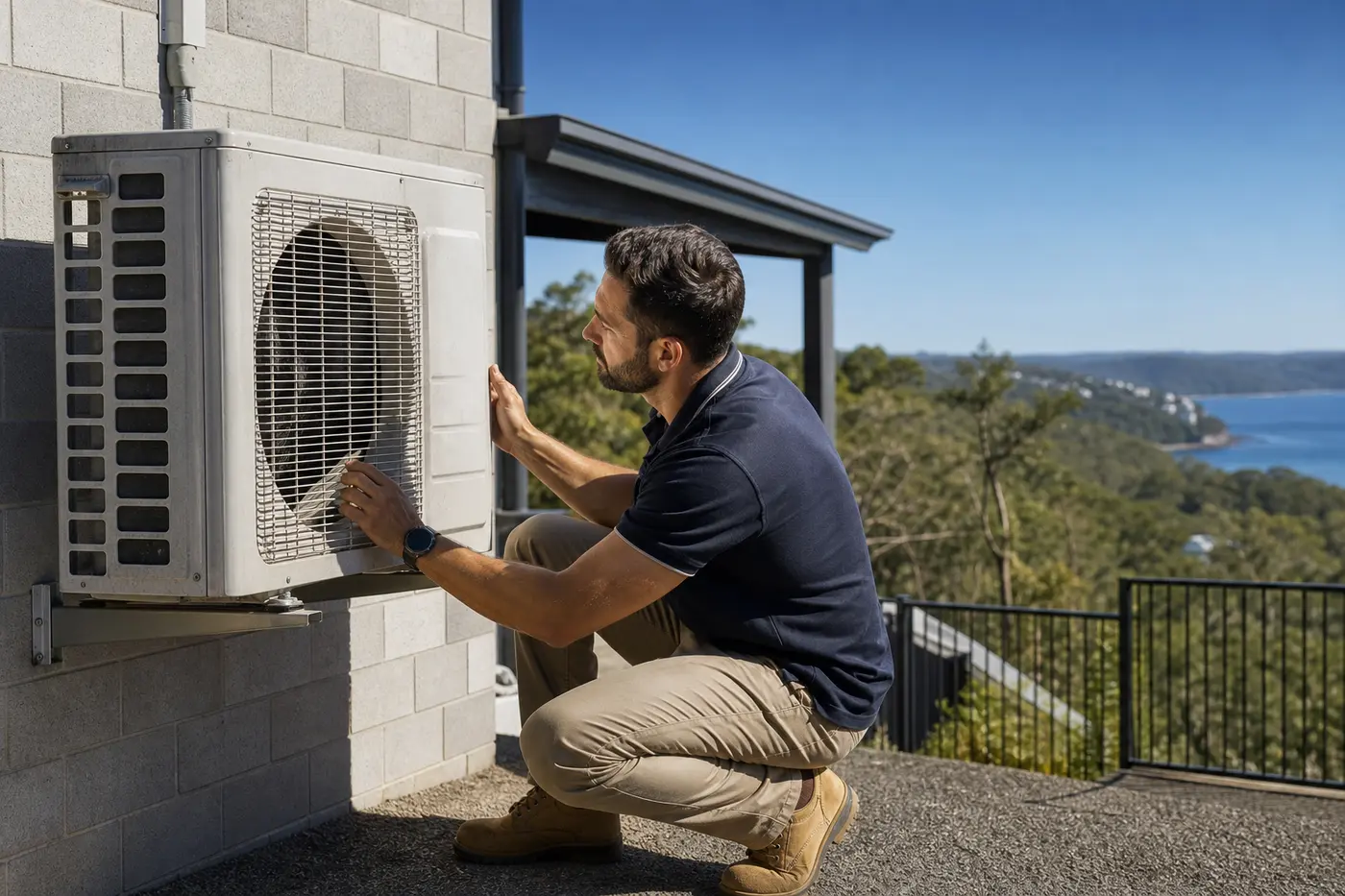
The outdoor unit does the actual heat dumping. It pulls heat out of your home and throws it outside, and it can only do that if air moves freely through its coils. On the Coast, two things work against it. Salt carried in off the water leaves a fine film that grabs dust, and leaf litter from gums and paperbarks packs in around the base. We see condensers near the beach at Terrigal or Avoca that look fine from the front but are half blocked at the back.
A blocked or grimy outdoor coil is one of the biggest reasons a system runs all day and still blows lukewarm air. It is also why a unit that cooled beautifully last summer can struggle this one. If you want the detail on how much a dirty coil quietly costs you, we broke it down in our piece on how clean coils cut your cooling costs. Clearing leaves and giving the outdoor unit breathing room is fine to do yourself. A proper coil clean is a job for a technician with the right gear.
Ice on the pipes? Turn it off now
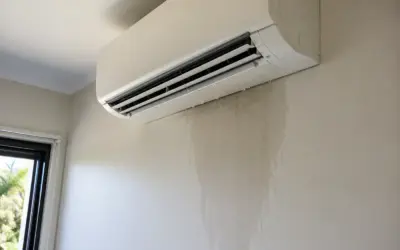
Here is one that catches people out. If you look at the copper pipes running to the outdoor unit, or at the indoor coil, and you see frost or ice, switch the system off. Do not keep running it. Ice usually means airflow has been restricted (often a filter left too long) and the coil has frozen over. Running it that way strains the compressor, which is the expensive part.
Switch to fan-only mode, or just turn it off, and let the ice melt fully before you try again. If it freezes up a second time, something underneath needs attention rather than another thaw.
When it is warm air and nothing above helped
If the filters are clean, the outdoor unit is clear, there is no ice, and it is still pushing out air that is barely cool, the cause is usually one you cannot fix from the loungeroom. The common ones we diagnose are:
- Low refrigerant from a leak. Refrigerant is the gas that actually carries the heat away. It does not get “used up”, so if the level is low there is a leak somewhere that needs finding and sealing. Topping it up without fixing the leak just wastes money.
- A failing capacitor or compressor. These are the electrical and mechanical heart of the outdoor unit. When they go, the fan can still spin while no real cooling happens.
- A faulty sensor or control board. The unit thinks it is doing its job when it is not.
Refrigerant and electrical work are licensed for a reason, and it is genuinely not worth the risk to poke around in there. This is the point to book our air conditioning repair team to test the system properly and tell you exactly what is going on before anything gets replaced.
If the unit is old, weigh up the repair first
There is one more thing worth thinking about before you commit to a big repair. If a system is well past ten years old, has needed a gas top-up before, and is now blowing warm again, the sensible move is to compare the repair cost against a new, more efficient unit rather than sinking money into an old one. We walk through how to make that call in our guide on whether to repair or replace your air conditioner. A good technician will give you both numbers so the choice is yours, not a surprise.
A quick word on prevention
Most of the “not cooling” jobs we attend in January trace back to a filter or coil that had not been touched in a couple of years. A yearly clean and check, ideally in spring before the heat arrives, keeps airflow up and catches a slow refrigerant leak while it is small. It is a lot cheaper than an emergency call-out on the hottest weekend of the year, when every installer on the Coast is flat out.
Straight answers about an AC that will not cool
Why is my air conditioner running but not getting cold?
The fan and the cooling are two different jobs. The fan can run happily while the part that actually chills the air has stopped working, usually because of low refrigerant, a dirty coil, a frozen indoor unit, or a failed component in the outdoor unit. If the basic checks do not fix it, that gap between “air moving” and “air cold” points to something internal.
Should I turn the air conditioner off if it is not cooling?
Yes, especially if you see ice on the pipes or the unit is straining. Leaving it running when it cannot cool puts load on the compressor and can turn a small problem into an expensive one. Switch it off, run through the free checks, and if nothing helps, leave it off until it can be looked at.
What is the 3-minute rule for air conditioners?
It is the habit of waiting a few minutes before restarting a unit you have just switched off. That short pause lets the internal pressure settle so the compressor does not have to start against a load, which protects it from wear. If your system short-cycles on and off by itself, that is worth mentioning when you book a service.
My split system fan is running but there is no cold air. What now?
Start with the mode and temperature on the remote, then the filters, then the outdoor unit. On a split system a blocked or dirty outdoor condenser is a frequent culprit, and near the coast it clogs faster. If it is clean and clear and still only fan, the refrigerant charge or a component is the likely issue and needs a technician.
Why is my air conditioner suddenly struggling to cool the house?
A sudden drop in performance often means airflow has fallen away (a clogged filter or coil) or the refrigerant has leaked down over time. Coastal salt and heavy pollen seasons speed both along. If it went from fine to poor over a single summer, a service will usually find the cause quickly.
How often should I have the system cleaned to avoid this?
Once a year suits most Central Coast homes, and homes right on the water or under heavy tree cover often do better with a check every spring. Regular filter cleans between services keep airflow up and are the single easiest thing you can do yourself.
If you have worked through the free checks and your air conditioner still is not blowing cold air, do not sweat through a heatwave waiting for it to sort itself out. Book a repair with our Central Coast team and we will find the real cause and give you honest options before any work goes ahead.