It’s a sticky February afternoon in Long Jetty. The cooler you bought last summer is roaring away in the corner, the windows are open like the box told you, and somehow the lounge room feels damper than it did an hour ago. We get versions of this story every summer, and it usually ends with the same question: evaporative cooler vs air conditioner, which one actually works on the Central Coast?
The short answer is that the two machines cool in completely different ways, and our coastal humidity favours one of them pretty heavily. The longer answer depends on where you live, how you use your home, and if you want heating as well. Here is how we explain it when we’re standing in someone’s living room.
They cool the air in two very different ways
An evaporative cooler pulls outside air through wet pads. As the water evaporates, it takes heat with it, so the air coming out is cooler. It’s the same thing you feel stepping out of the surf on a breezy day. The catch is that the air also picks up that moisture on its way into your house.
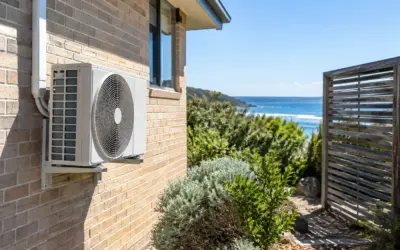
A refrigerated air conditioner (a split system or ducted system) works more like a fridge. It moves heat from inside your home to the outdoor unit using refrigerant, a fluid that soaks up heat as it changes from liquid to gas. Along the way it also pulls moisture out of the room, which is why there’s a drain line dripping outside. A reverse cycle system can run that process backwards in winter to heat the house.
So one machine adds water to the air and the other takes it out. On the Central Coast, that difference matters more than anything else on the spec sheet.
Humidity is where evaporative cooling falls over
Evaporation only works well when the air is dry enough to soak up more water. On a hot, dry day out west, an evaporative system can feel brilliant. On a muggy coastal day, when the air is already heavy with moisture, the water on the pads has nowhere to go. The cooler still blows, but the air coming out is only a little cooler and noticeably damper.
That’s the frustrating part. The days you most want relief here are often the humid ones, when it’s warm overnight and the sea breeze has dropped off. Those are exactly the days an evaporative cooler struggles most. A refrigerated system does the opposite: the stickier it is, the more you notice it drying the room out. Plenty of our customers run theirs on dry mode through the shoulder seasons, and we’ve written about how dry mode handles those muggy days if you want the detail.
There’s a moisture problem beyond comfort, too. Pumping damp air into a home that’s already fighting coastal humidity can encourage mould on ceilings, in wardrobes and behind furniture. In more than 15 years on the Central Coast, we’ve found a lot of the mould we deal with starts with too much moisture and too little airflow. We wouldn’t add more of it on purpose.
Evaporative cooling still has a few real strengths
We’re not going to pretend evaporative cooling is useless. It has genuine points in its favour, and for some people they win out.
- Lower running costs. There’s no compressor, so it mostly runs a fan and a small water pump.
- Cheaper to buy upfront, especially the portable units sold at hardware stores.
- Fresh air all the time, if you’d rather have open windows than a sealed room.
- Garages, sheds and workshops where the roller door is open anyway.
If you live further inland, out towards the hinterland valleys rather than right on the water, hot afternoons can be drier than they are beachside, and an evaporative unit will do better there. It still won’t heat the house in July, though.
Where a refrigerated system pulls ahead
For most of the homes we visit, from the lakes down to the Peninsula, a reverse cycle system is the better fit. The reasons stack up quickly.
It works in any weather. Humid, dry, still or windy, it cools to the temperature you set because it doesn’t rely on evaporation. It also removes moisture rather than adding it, which helps with that clammy feeling and with mould.
You keep the house closed. Evaporative cooling needs windows or doors open so the damp air can escape, which isn’t ideal overnight, when it’s raining, or when salty air and dust are blowing in. With a split or ducted system, you shut the windows and the room holds its temperature.
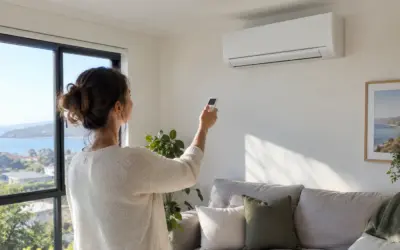
And there’s heating. This one surprises people who’ve only thought about summer. A reverse cycle system heats the home in winter as well, so one installation covers you all year. An evaporative cooler just sits there once the cold weather arrives.
The trade off is cost. A refrigerated system costs more to buy and install, and it uses more power while it’s running. Good sizing, sensible temperature settings and regular cleaning narrow that gap a lot. In our experience, an oversized or neglected system is usually what makes the bills sting.
Those portable “air coolers” are evaporative too
This catches a lot of people out. The cheap portable units sold as “air coolers” are small evaporative coolers. They are not portable air conditioners, which have a compressor and an exhaust hose out a window. On a humid coastal night in a closed bedroom, an air cooler mostly raises the humidity while moving the air around. It can feel nice sitting right in front of it, but it won’t bring the room temperature down the way people expect.
If you’ve got one and it’s disappointed you, that’s very likely why. It isn’t broken. It just isn’t suited to the conditions.
Switching from evaporative to reverse cycle is common
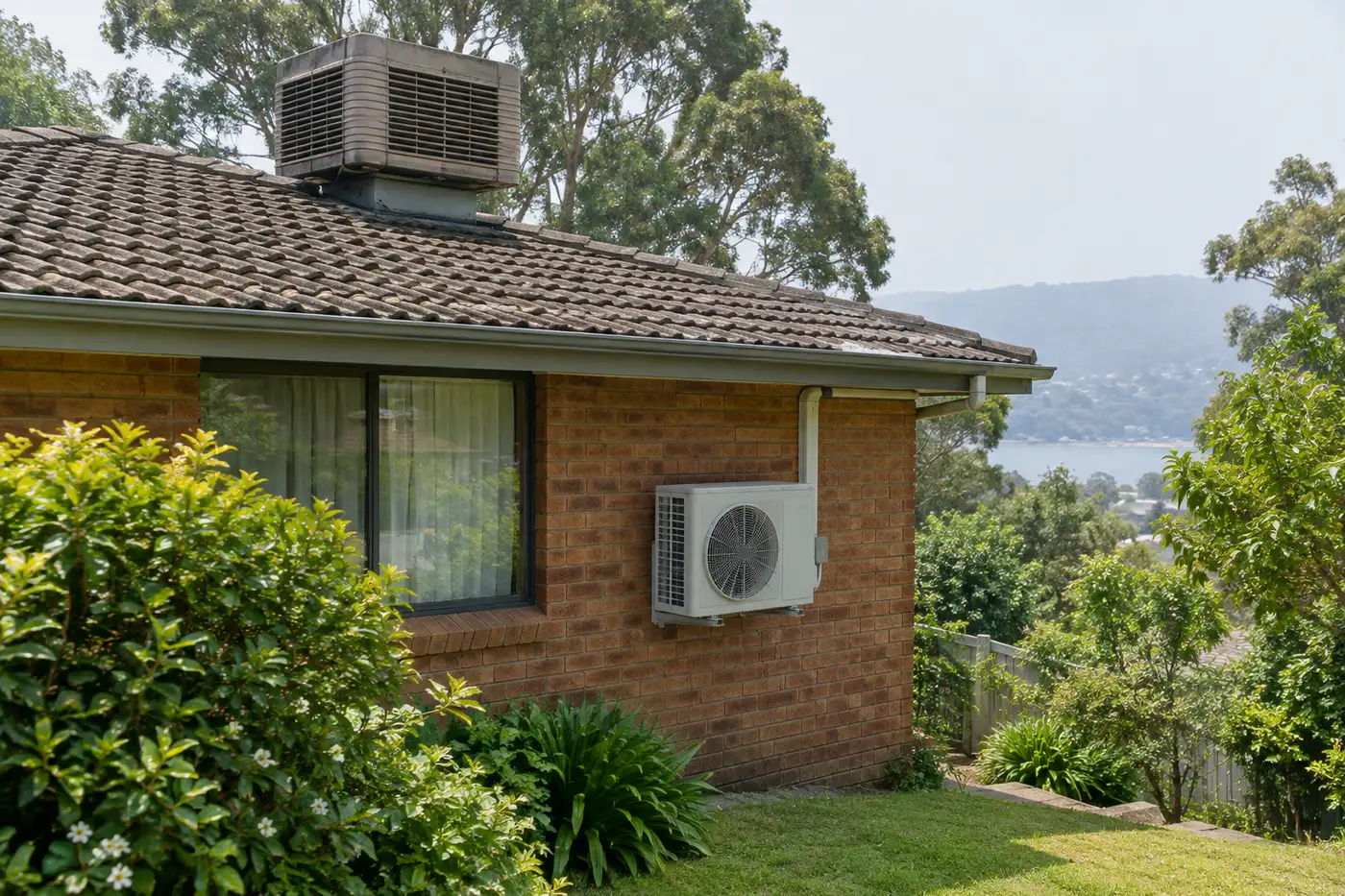
Plenty of older homes on the coast still have a roof mounted evaporative system that came with the house. When it wears out, owners usually ask whether to replace it like for like or switch to refrigerated air.
Most of them switch. The existing ductwork often can’t simply be reused, because refrigerated systems need insulated ducts sized for that system. Outlets and the return air grille may need to move as well. That’s something we work out on site, room by room, rather than guess at over the phone.
At that point you’re also choosing between a ducted or split system setup, which comes down to the size of the home, how many rooms you actually use, and the budget. Some households replace a whole house evaporative system with ducted reverse cycle. Others find two or three well placed split systems cover the rooms they live in for less.
If you’re weighing up the change, our team handles reverse cycle installation across the Central Coast, including the sizing and placement decisions that decide how well a system performs here.
Coastal homes usually suit refrigerated air
Evaporative cooling makes sense if you live somewhere drier, like keeping windows open, mostly need to cool a garage or workshop, and don’t need heating. A reverse cycle system makes sense if you’re near the water, deal with humid summers and mould, want to close up the house at night, or want one system for both summer and winter. For most Central Coast homes, that second list is the one that sounds familiar.
Common questions about evaporative coolers and air conditioners
Are evaporative coolers as good as air conditioning?
In hot, dry conditions they can come close and cost less to run. In humid weather, which the Central Coast gets plenty of in summer, they cool far less effectively than a refrigerated system and can leave rooms feeling damp. For coastal homes, air conditioning is the more reliable option.
What is the downside of evaporative cooling?
It adds moisture to the air, loses much of its cooling power on humid days, and needs open windows or doors to work. It can’t heat your home either, and the pads and water tank need regular cleaning to stay fresh.
Which is healthier, an air conditioner or an evaporative cooler?
Both can be healthy if they’re kept clean, and both can cause problems if they aren’t. In a humid coastal home, a refrigerated system has the edge because it removes the moisture mould thrives on, while an evaporative cooler adds it. Regular professional cleaning stops an air conditioner’s coils and fan becoming a mould source themselves.
What’s the cheapest way to cool a room?
On running costs alone, fans and evaporative coolers use the least power. But cheap isn’t much use if the room doesn’t actually get cooler, which is often the case on muggy coastal days. A correctly sized split system run at a sensible temperature is usually the most cost effective way to genuinely cool a room here.
Do evaporative coolers work in humid weather?
Not well. The more moisture already in the air, the less water can evaporate from the pads, so the cooling effect shrinks. On the most humid days you may get little more than a damp breeze.
Can I reuse my evaporative ducting for ducted reverse cycle?
Usually not as it stands. Refrigerated systems need insulated ducts sized to suit the unit, so most changeovers involve new ductwork and sometimes moved outlets. We check this during an on site visit before quoting.
If your evaporative system is due for replacement, or you’re tired of a cooler that can’t keep up in February, talk to us about a split or ducted system sized for your home. We’ll look at the rooms you actually use and give you a straight recommendation.