It is the first properly hot afternoon of the season. You switch the air conditioner on, hear the outdoor unit start up, and a few seconds later the house goes quiet. The switchboard shows one switch flipped down. You reset it, try again, and it trips again. An air conditioner tripping the circuit breaker is one of the calls we get most as summer arrives on the Central Coast, and it is one where the right next move matters.
Here is what that trip is telling you, what is safe for you to check, and when it needs a licensed technician.
The switch that trips is doing its job
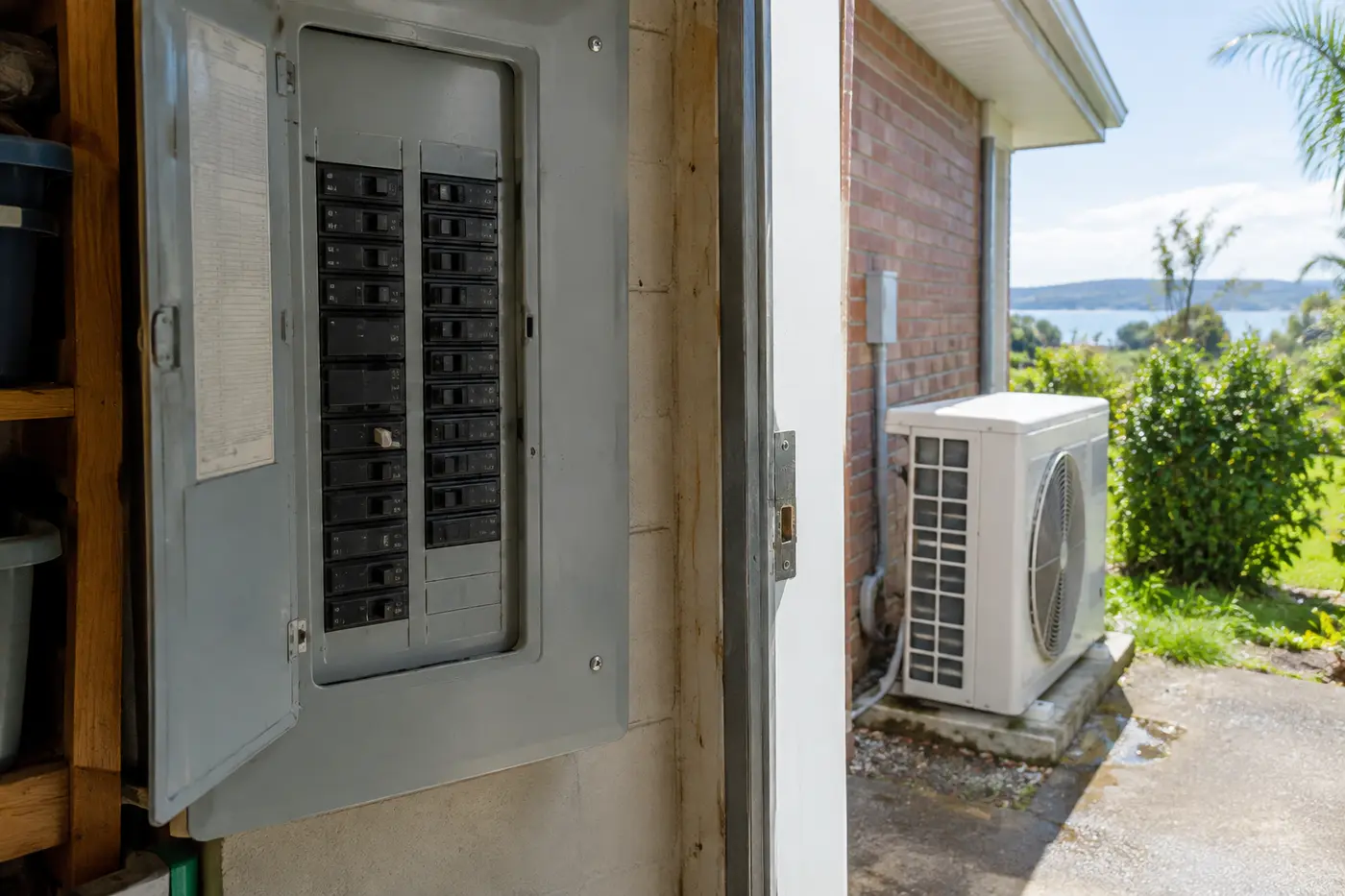
A trip is a protection device working as designed. Your switchboard usually has two kinds, and which one flips tells us a lot.
A circuit breaker cuts power when a circuit draws more current than it is rated for, or when there is a short circuit. A safety switch (also called an RCD, for residual current device) watches for electricity leaking somewhere it should not go, such as through water or damaged wiring to earth. It is the switch that protects people from electric shock.
Most switchboards label the safety switch with a test button. If that is what dropped, think leakage. If it is the breaker marked for the air conditioner, think overload or a short. Write down which one it was before you do anything else. That one detail saves real time when we arrive.
One reset is reasonable. Three is not.
If the breaker trips once, it is fine to switch the air conditioner off at the wall controller, reset the breaker, wait a few minutes and try once more. Inverter systems in particular can throw an odd trip after a storm or a power flicker and then run happily for years.
If it trips a second time, stop. Leave the air conditioner off at the breaker and do not keep resetting it. Each restart pushes a heavy surge of current through a part that is already struggling. Repeated resets can turn a capacitor job into a compressor job, and a compressor is the most expensive part of the system. If you smell burning, hear buzzing from the outdoor unit or see scorch marks anywhere, leave it off and call us straight away.
When it trips tells us why it trips
We always ask homeowners exactly when the trip happens. The timing points to a short list of causes.
| What you notice | Where we usually look first |
|---|---|
| Trips the instant you turn it on | A short circuit, often a compressor winding failing to earth, or damaged wiring |
| Trips a few seconds in, as the outdoor unit starts | The start capacitor, or a compressor struggling to get going |
| Runs for a while, then trips on hot days | Overheating from dirty coils or filters, low refrigerant, or a fan motor on its way out |
| Safety switch trips after rain or a storm | Water getting into the outdoor unit or the isolator switch beside it |
| Other appliances trip it too | The circuit itself, a tired breaker or a shared circuit, which is an electrician’s call |
The causes we find most in Central Coast homes
Moisture and salt air in the outdoor unit
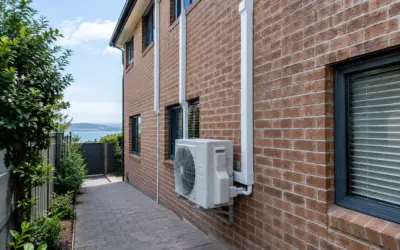
Homes close to the water, from The Entrance to Terrigal to Umina Beach, see this more than anyone. Salt in the air settles on the outdoor unit and slowly corrodes terminals and connections. Add heavy rain or a southerly storm and moisture finds its way into the electrical side of the unit or the outdoor isolator switch. The result is usually a safety switch trip rather than a circuit breaker trip. It often comes and goes with the weather, which makes people doubt themselves. It is a real fault, and worth having checked before it gets worse.
A failing capacitor
The capacitor is a small part that gives the compressor and fan motors the push they need to start. As it weakens, the motor draws far more current trying to turn over, and the breaker trips. Caught early, this is one of the more straightforward repairs we do.
A system working too hard
Clogged filters and dirty coils make the whole system run hotter and draw more current, especially on the hottest days of the year when it is already near its limits. If your unit has not been cleaned in a long while, this is a likely suspect. Our post on how clean coils take the strain off your system explains why this matters so much.
Compressor faults
When the insulation inside a compressor breaks down, current leaks to earth and the trip happens instantly, every time. This is the cause nobody wants, and on an older unit it often leads to a bigger conversation. If that is where you end up, our guide to deciding whether to repair or replace an air conditioner sets out the questions worth asking.
Wiring, circuits and unwelcome visitors
Loose or overheated connections, an ageing breaker, or an air conditioner sharing a circuit it was never meant to share can all cause trips. So can ants, geckos and rodents. They like the warmth of the outdoor unit’s circuit board, and one in the wrong spot can short it out. We see it more often than people expect.
What you can safely check yourself
None of these involve opening the unit or touching wiring. They simply help narrow things down.
- Which switch tripped: the safety switch or the air conditioner’s own breaker
- The timing: instantly, after a few seconds, or after a long run
- Whether it followed rain, a storm or hosing near the outdoor unit
- The indoor filters (if they are thick with dust, cleaning them is normal owner upkeep)
- Leaves, garden waste or anything stacked against the outdoor unit
- Whether other appliances trip the same switch while the air conditioner is off
Please leave the covers on. Inside the outdoor unit, some parts can hold an electrical charge even after the power is off. In NSW, electrical wiring work has to be done by a licensed electrician, and refrigerant work needs its own licence. This is not a job for a video tutorial.
What happens when we come out
We start with what you noticed, then test the unit safely with the power isolated. That usually means checking the compressor and fan motors for faults to earth, testing the capacitor, inspecting terminals and the isolator for corrosion or water, and checking the system is not overheating from dirt or low refrigerant. If the fault turns out to be in the house wiring rather than the air conditioner, we will tell you plainly so you can get the right person in.
Our team has over 15 years of experience on the Central Coast, and coastal corrosion is a big part of why we look so closely at outdoor units here. If your system keeps tripping, book an air conditioning repair visit and we will find the cause before the hottest weeks of summer arrive.
Common questions about air conditioners tripping the power
Why is my outdoor unit tripping the electricity?
The outdoor unit holds the compressor, fan motor and capacitor, which draw the most current in the whole system. A weak capacitor, a compressor fault or moisture in the electrics are the usual reasons. On the coast, corrosion from salt air makes the moisture problem more common.
How can I tell if the circuit breaker itself is bad?
A worn breaker can trip under a normal load, so the air conditioner gets blamed for something it did not do. The clue is when the unit tests fine but the breaker still trips, or the breaker feels warm or looks discoloured. Testing and replacing breakers is work for a licensed electrician.
How do I fix a breaker that keeps tripping?
You fix whatever is causing the trip, not the breaker. Resetting it over and over, or fitting a bigger breaker so it stops tripping, removes the protection without solving the fault. Turn the system off, note when and how it tripped, and get it tested.
Why does my safety switch keep tripping when everything is unplugged?
Hardwired appliances like air conditioners, hot water systems and ovens stay connected even when nothing is plugged in. Water getting into outdoor wiring or fittings is also common after rain. If the air conditioner is the suspect, switching off its own breaker and seeing whether the trips stop is a useful clue.
Is it dangerous if my air conditioner keeps tripping the breaker?
It can be. The switch is protecting your home from overheating wiring or an electrical leak to earth. Overriding it, or resetting it again and again, puts the system and your home at risk, so leave it off after a second trip and have it checked.
Can a dirty air conditioner really trip the power?
Yes. Blocked filters and dirty coils make the compressor work harder and draw more current. That is most likely on very hot days, when the system is already running flat out. A professional clean often sorts it out if there is no other fault.