A customer in Avoca Beach rang us last summer because their split system had started cutting out on hot afternoons. The indoor unit looked fine. The outdoor unit was zipped inside a snug, waterproof cover they had bought to protect it from the salt air. It had been running inside that bag every day. Once the cover came off, the problem stopped.
So, should you cover your outdoor air conditioner unit? For most Central Coast homes the honest answer is no, not while it is running and not as a permanent fixture. There are a few situations where some cover makes sense, and we will go through those, but the full wrap you see in shops usually does more harm than good here.
Most of the advice online was written for snow
Search this question and a lot of what comes up is American. In much of the US, people switch the air conditioner off in autumn and leave it sitting under snow and ice for months. Covering the top of an idle unit there can make some sense.
That is not how we use air conditioning on the Coast. Most systems here are reverse cycle, which means the same unit cools in summer and heats in winter. The outdoor unit works in every season. In heating mode it also runs a defrost cycle and drips water, and it needs open air around it to do both. A cover designed for a unit that sits idle all winter has no place on one that runs every cold night in Kariong or Wyong.
What a full cover actually does to a running unit
The outdoor unit (the condenser) has one main job in summer: get rid of the heat your system has pulled out of the house. It does that by drawing air through its metal fins and blowing it out the front. Wrap it up and that hot air has nowhere to go. It gets sucked straight back in, the unit runs hotter, and it works harder for less cooling.
In practice we see three things happen:
- Power bills creep up, because the compressor runs longer to reach the same temperature
- The system overheats and shuts itself down, usually on the hottest afternoons
- Parts wear out sooner, since a compressor that always runs hot does not last as long
If your system keeps shutting off, the cover is the first thing to check. Our guide to an air conditioner that keeps tripping the power runs through the other common causes.
Covers trap the salt and damp they are meant to keep out
This one surprises people. Most homeowners buy a cover to fight salt air, and the logic seems sound. In reality, a cover does not seal out salty, humid air. It lets it in, then holds it against the coil with nowhere to dry. Rain and condensation collect underneath too. A unit that stays wet and salty for days on end corrodes faster than one left open to the sea breeze, which at least dries it out.
Covers also make a cosy home for wildlife. Ants, spiders and the odd small animal love a dark, dry spot, and they do not always stay out of the electrics. We have lifted covers off units in Terrigal and Toukley and found nests in places no one wants a nest.
When a cover genuinely helps
There are times when some protection is worth it. The rule is the same for all of them: the system should be switched off at the isolator, and the cover should come off before anyone turns it back on.
Building or renovation work. Render, paint overspray, cement dust and sawdust are terrible for a condenser coil. If tradies are working near the unit, cover it for the duration and leave the system off.
Holiday homes left empty. Plenty of places around Pearl Beach, Copacabana and The Entrance sit empty for months. A breathable cover over a unit that will not be used can keep leaves and bird droppings off. A full waterproof bag is still a bad idea, for the moisture reasons above.
Falling debris. If the unit sits under a gum or a jacaranda, a solid hood that leaves the sides and front open can stop leaves and flowers piling into the fins. It needs to sit well above the unit so hot air can escape.
Hail. Hail can flatten the thin aluminium fins on the coil, which cuts airflow. A sturdy hood over the top gives some protection without boxing the unit in.
Screens, louvres and shade work if you leave gaps
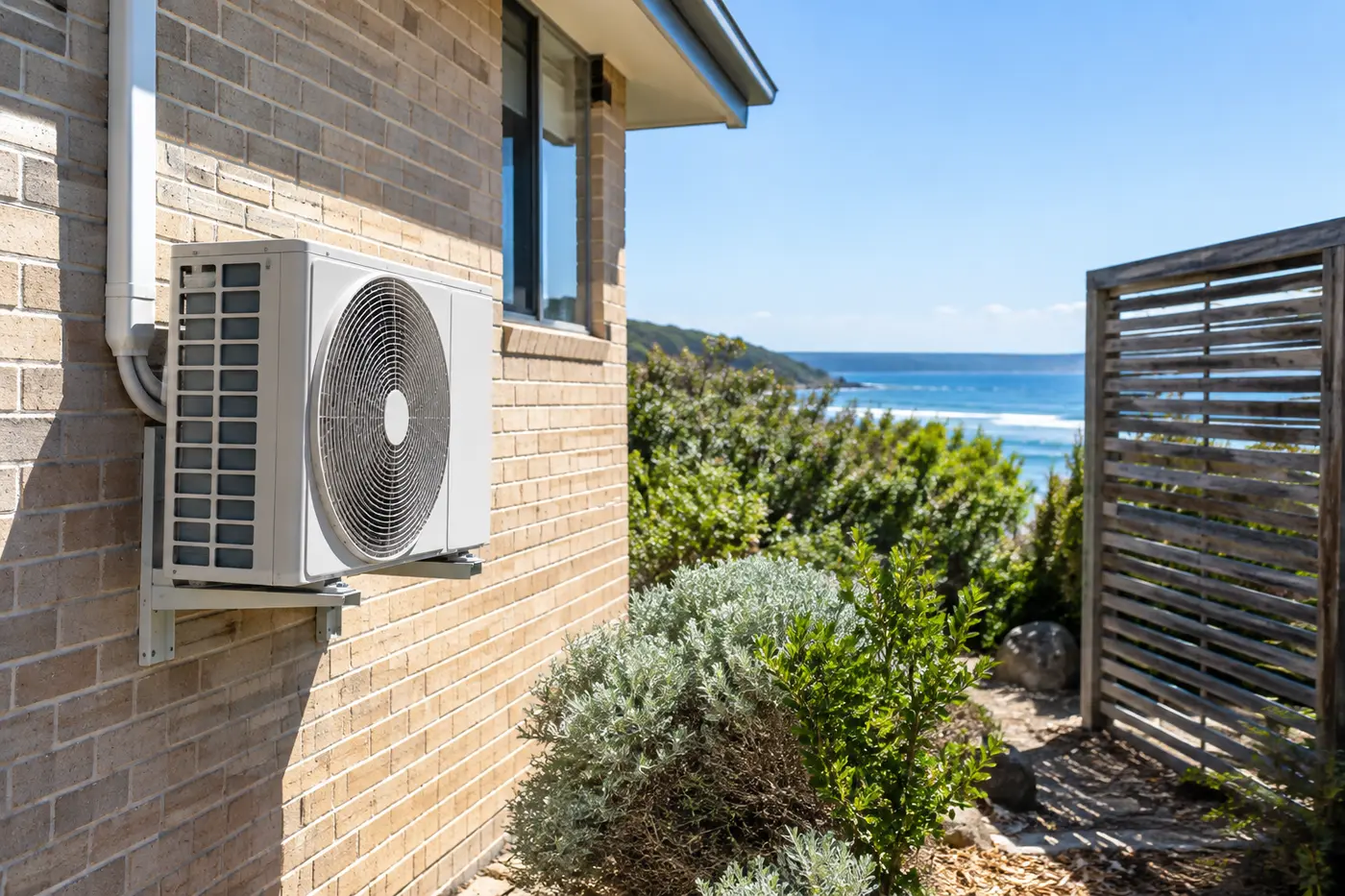
Plenty of people would simply rather not look at the outdoor unit, and that is fair. A louvred screen can hide it nicely, but it has to let air flow freely in and out. Every manufacturer sets minimum clearances around the unit in its installation manual. Those figures vary by brand and model, so check the manual for yours or ask your installer before you build anything. A screen that sits too close, or louvres angled to push hot air back into the intake, cause the same problem as a cover.
Shade is a mixed bag. Keeping afternoon sun off the casing does no harm, as long as the structure sits well above the unit and nothing blocks the airflow. The unit breathes air from a wide area around it, though, so a small patch of shade rarely changes much. Clear airflow matters far more.
If you are planning a new system, the best fix is choosing a good spot for the outdoor unit before it goes in. Our post on keeping AC efficient in a coastal climate has more on placement and salt exposure.
What protects a coastal unit better than a cover
The things that keep an outdoor unit going near the beach are fairly unglamorous. Keep the area around it clear of plants, pots, bins and stored gear. Pull leaves away from the base. Some manufacturers recommend a gentle rinse with fresh water for units close to the sea, so check your manual first, and never point a pressure washer at the fins.
Beyond that, regular professional checks matter more on the Coast than inland. During an air conditioner service, we clean the condenser coils, clear out leaves and debris, check the fan motor and blades, inspect the refrigerant lines and look over the wiring and terminals for corrosion. Catching early salt damage on a terminal or coil is far cheaper than replacing a compressor that has been running hot for a few summers.
We have been looking after air conditioners across the Central Coast for over 15 years, from Umina Beach to Lake Haven. If your outdoor unit is under a cover right now, take it off and see how the system runs. If you are worried about what the salt has already done, book a coastal service check with our team and we will tell you plainly what condition it is in.
Common questions about covering outdoor AC units
Do we need to cover an outside AC unit?
No. Outdoor units are built to sit out in the weather all year, including rain, sun and sea air. A cover is only worth using in specific situations, such as nearby building work, and only while the system is switched off.
Should I put a cover over my split system outdoor unit?
Not as a permanent fixture, and never while it is running. A full cover traps heat, moisture and salt against the coil. If falling leaves or hail are the worry, a solid hood well above the unit that leaves the sides and front open is the better choice.
How do I cover a split system outside if I have to?
Switch the system off at the isolator first. Use a breathable cover rather than a waterproof bag, or protect only the top if debris is the problem. Take it off completely before you turn the system back on.
Should I cover my outdoor air conditioner unit in winter?
Not on the Central Coast if you have a reverse cycle system. It does your heating in winter, so the outdoor unit needs open air to run, defrost and drain. Winter cover advice comes mostly from places where units sit unused under snow.
Should I cover my outdoor unit in summer to keep the sun off?
Summer is the worst time for a full cover, because the unit is working hardest to get rid of heat. Shade from a structure built well above the unit does no harm, but keeping the airflow clear does much more for performance.
Can I build a screen or enclosure around my outdoor unit?
Yes, as long as it leaves the clearances the manufacturer specifies and lets air move freely in and out. Check the installation manual for your model, and avoid louvres that push hot exhaust air back towards the unit.