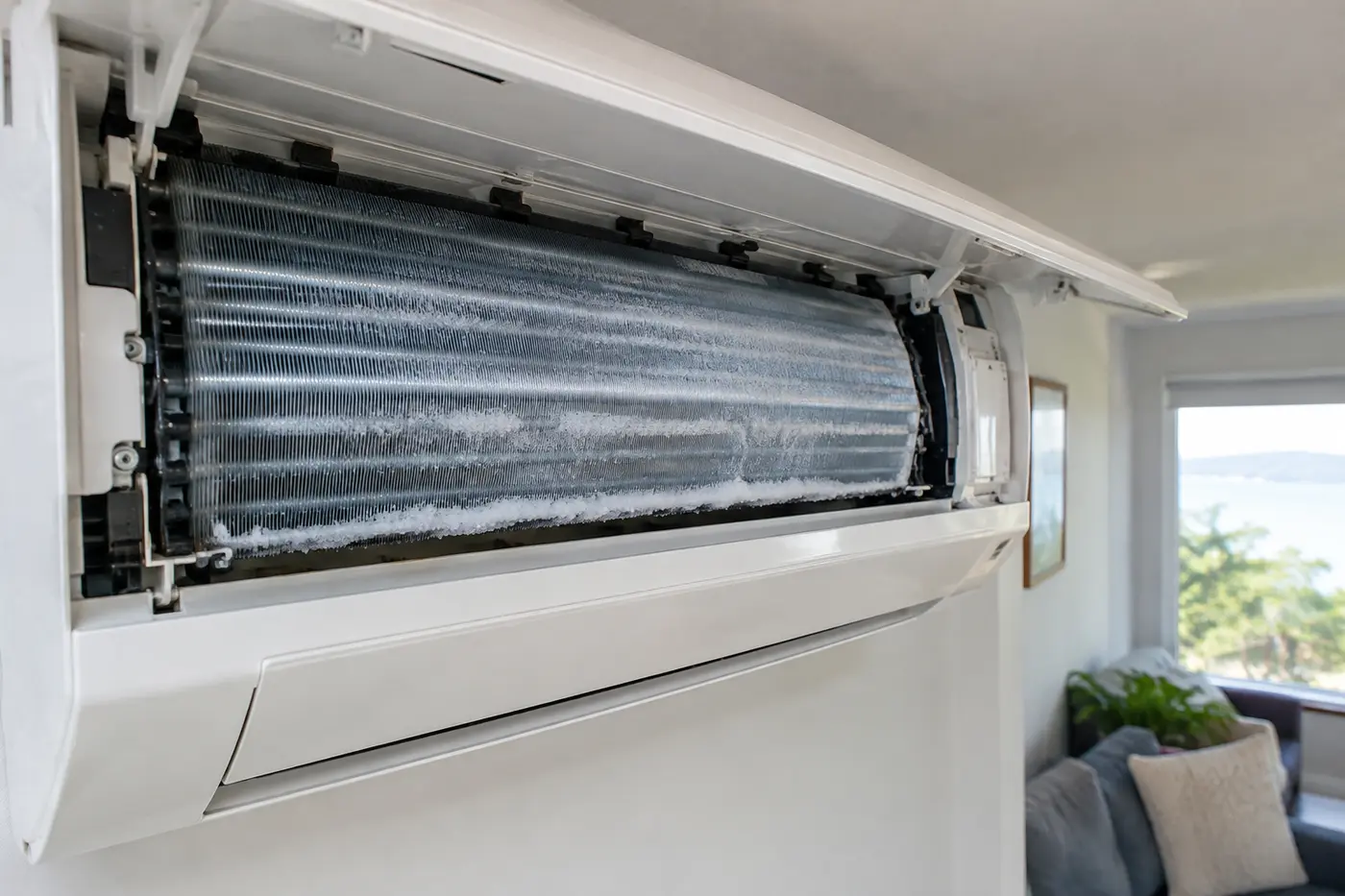
It’s the first properly hot afternoon of the season. The split system has been running since lunch, the room still feels warm, and when you look up at the indoor unit there’s frost on the coil behind the louvres. Maybe there’s a drip down the wall too. Ice on something that’s meant to be cooling your house looks wrong, and it is. An air conditioner freezing up is a symptom, not a fault in itself, and the cause is usually one of a handful of things we see every summer across the Central Coast.
Here’s what is going on, the few safe things you can do right now, and the point where it becomes a job for a licensed technician.
Ice forms when the coil gets colder than it should
Inside your indoor unit is a coil (the evaporator) that refrigerant runs through. Warm room air blows across it, the coil soaks up the heat, and cooler air comes out the other side. Moisture from the air condenses on the coil and runs away down the drain. That’s normal, and it’s why every system has a drain line.
The coil is supposed to sit cold but above freezing. If not enough warm air is moving across it, or the refrigerant pressure drops, the coil temperature falls below zero. That condensation turns to frost, the frost turns to ice, and the ice blocks even more airflow. It feeds on itself. Within a few hours a lightly frosted coil can become a solid block.
So the real question is never “why is there ice?” It’s “what is stopping the coil from getting enough heat?”
The five causes we find most often
Clogged filters
This is the one we see more than any other. A filter packed with dust, pet hair or kitchen grease chokes the airflow, and the coil runs too cold. In homes near the beach the filters also catch fine salt and sand, so they can block up faster than people expect.
A dirty coil or fan
Even with a clean filter, a coil coated in grime or mould can’t swap heat properly. The barrel fan (the long cylinder that pushes air out of a split system) can also cake up with dirt until it moves far less air than it was built to. You often can’t see this without taking covers off.
Low refrigerant
Air conditioners don’t use up refrigerant like a car uses fuel. If it’s low, there’s a leak somewhere. Less refrigerant means lower pressure, and lower pressure means a colder coil. This is the cause that worries us most, because running a system short of gas puts extra strain on the compressor, which is the most expensive part to replace.
Blocked vents or returns
On ducted systems, closing off too many outlets or pushing a couch against the return air grille can starve the system of air. We sometimes see this after people shut vents in rooms they don’t use to “save power”. It can backfire.
A fan or sensor fault
If the indoor fan motor is failing, or a temperature sensor is telling the system the room is warmer than it is, the unit can keep cooling hard with too little air moving. These are electrical faults and need proper testing.
Ice on the outdoor unit in winter is often normal
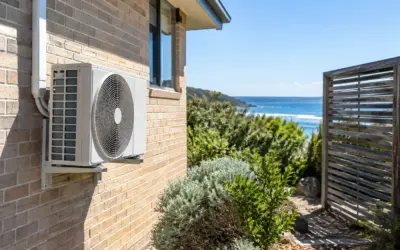
This one surprises people. If you run a reverse cycle system on heating during a cold morning, say in the hinterland around Kulnura or Yarramalong, the outdoor unit can frost over. The system is designed for this. Every so often it runs a defrost cycle: the fans stop, you may hear a hiss or see steam rising off the outdoor unit, and heating pauses for a short while before it starts again.
That’s the unit looking after itself. It becomes a problem if the ice keeps building and never clears, if the outdoor unit is sitting in a puddle that freezes around it, or if heating never comes back after the pause.
What you can safely do right now
A few things are fine for any homeowner, and they can stop a small problem becoming an expensive one:
- Switch cooling off. Keeping a frozen unit running is the quickest way to damage the compressor.
- Set the system to fan only if it has that mode, which helps the ice melt, or simply turn it off and let it thaw on its own.
- Put a towel or bucket under the indoor unit. All that ice turns into water, and the drain may not keep up.
- Check the filters once it has thawed. If they’re grey and furry, a gentle rinse and full dry before refitting is fine.
- Make sure nothing is blocking vents, return grilles or the outdoor unit.
What you shouldn’t do: chip or scrape at the ice, use a heat gun or hair dryer on the coil, or start pulling covers off. The coil fins are thin aluminium and the copper lines are easy to puncture. A quick shortcut can turn a service call into a refrigerant repair.
If water has already run down the wall or onto the floor, our guide to why an air conditioner leaks water covers what to check once the ice is gone.
If it freezes again, call someone
A unit that froze once because the filters were filthy, and works perfectly after a clean, probably just needed a clean. A unit that freezes again within a day or two with clean filters is telling you something else is wrong. In our experience that usually means a refrigerant leak, a dirty coil or a failing fan.
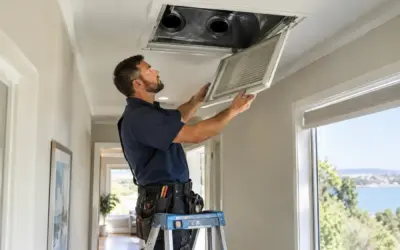
None of those are owner jobs. Handling refrigerant needs a specific licence, finding a leak needs proper gear, and testing fan motors and sensors means working inside live electrical parts. Our team has spent more than 15 years on Central Coast systems, and a frozen coil is one of the most common air conditioning repair jobs we attend once summer starts. We find the cause, fix it, and test the system properly before we leave, so it doesn’t just ice up again next week.
One more reason not to put it off: many manufacturers require proof of regular professional servicing to keep a warranty valid. A unit run for weeks while low on refrigerant can end up with compressor damage that’s harder to claim.
Keeping it from happening again
Most freeze ups we attend could have been avoided. Clean filters regularly, more often if you have pets or live close to the water. Keep furniture and curtains off vents and grilles. Don’t set the temperature lower than you need, and don’t let the system run flat out for days without a break. If your unit has been struggling to cool the house lately, that weak performance is often the early warning before ice shows up.
A yearly professional service catches the rest. It covers the things you can’t see: refrigerant charge, coil and fan condition, drain flow and electrical checks.
If your system keeps icing up, or you’d rather someone just found the cause, get in touch with our team about fixing a frozen air conditioner anywhere on the Central Coast. We’ll track down why it’s happening and get it cooling properly again before the real heat arrives.
Common questions about a frozen air conditioner
What causes an air conditioner to keep freezing up?
Repeat freezing almost always comes down to poor airflow or low refrigerant. If clean filters and clear vents haven’t fixed it, the likely culprits are a refrigerant leak, a dirty coil or barrel fan, or a failing fan motor. Each needs a technician to diagnose properly.
How long should I leave my AC off after it freezes up?
Leave it off, or on fan only, until every bit of ice has melted and the coil is dry. Light frost can clear in a few hours, while a solid block can take much longer. Restarting it while ice remains just lets it freeze again faster.
What is the fastest way to unfreeze an AC unit?
Running the fan only mode with cooling off is the quickest safe method, because it pushes room air across the coil. Avoid heat guns, hair dryers or scraping, as these can damage the fins or puncture a refrigerant line.
Will a frozen AC fix itself?
The ice will melt by itself, but the cause won’t go away. If it was a blocked filter you can sort that yourself. If it freezes again with clean filters, there’s an underlying fault that will keep coming back and may get worse.
Why is my AC unit freezing up in winter?
On a reverse cycle system running heat, frost on the outdoor unit during cold mornings is normal and clears during the defrost cycle. If the ice never clears, or heating doesn’t resume, have it checked, because a faulty defrost sensor or low refrigerant could be the cause.
Is it dangerous to run an air conditioner that’s frozen?
It isn’t a safety hazard in the way a burning smell would be, but it can be expensive. Running a frozen system strains the compressor, and melting ice can overflow the drain and damage walls or flooring. Turn it off until it’s thawed and the cause is found.