It’s usually the first properly hot afternoon of the season. You close the blinds, switch on the split system you haven’t touched since autumn, and within a minute the lounge room smells like a gym bag. Or worse, something faintly burnt. An air conditioner smell is one of the most common reasons people call us in early summer. Most of these smells are harmless and easy to fix. A few are not, and it pays to know which is which.
Your nose is a surprisingly good diagnostic tool here. Each type of odour points to a different part of the system, so here is how we read them after more than 15 years working on air conditioners across the Central Coast.
Musty or “wet socks” means mould on the indoor unit
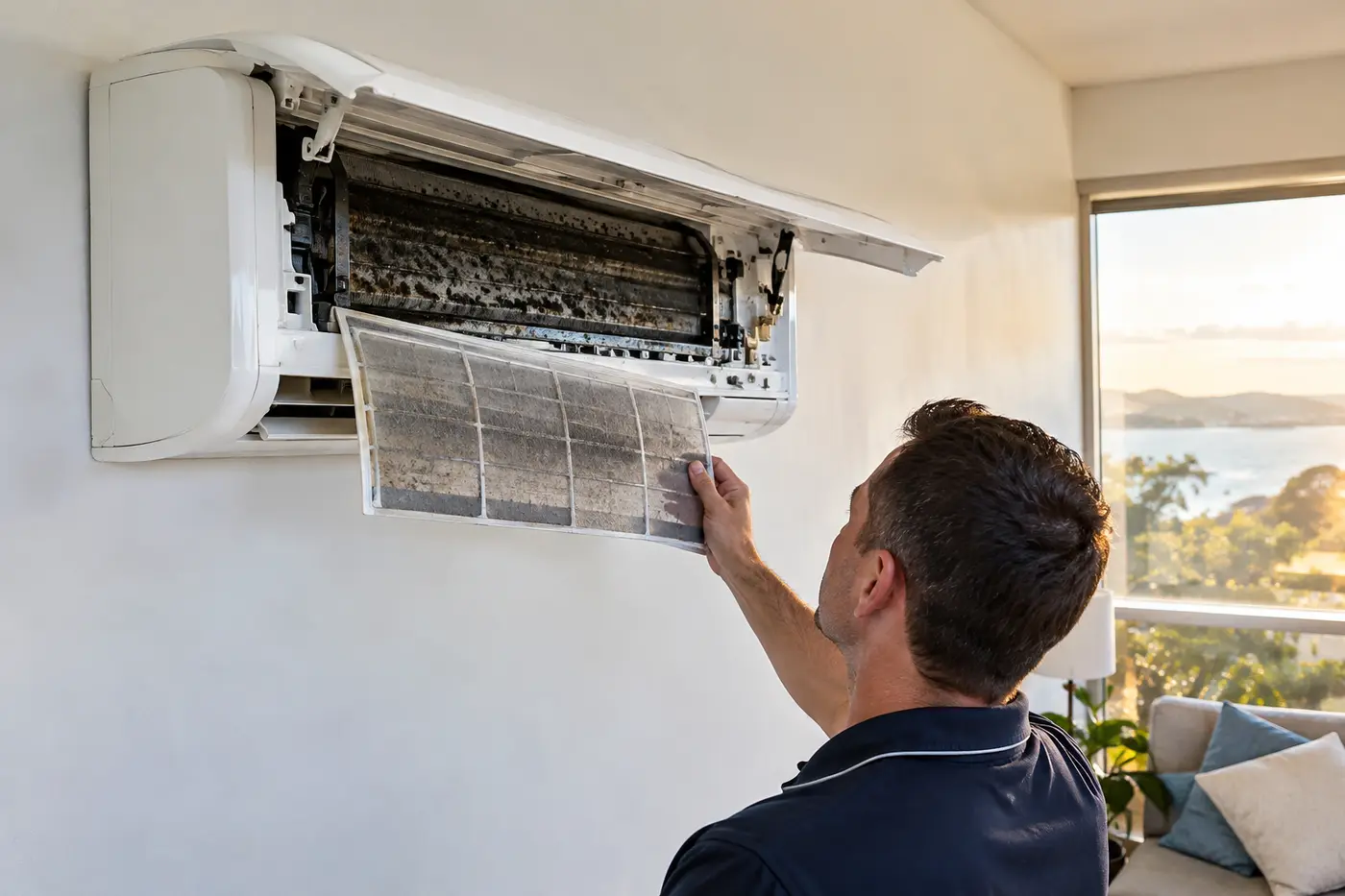
This is the one we smell most, by a long way. Inside the indoor unit is a coil (the evaporator) that gets cold and wet every time the system cools. Dust sticks to that damp surface, and mould and bacteria grow happily on the mix. When the fan starts, it blows the smell straight into the room.
Coastal homes tend to get it worse. Our humid summers keep the coil damp for longer, and homes close to the water in places like Terrigal, The Entrance or Ettalong often show it sooner than homes further inland. The classic pattern is a smell that’s strongest in the first few minutes after start-up, then fades a little.
Cleaning the filter helps, but it won’t solve it. The growth lives on the coil, the fan barrel and in the drain tray, and you can’t reach those without taking the unit apart. We’ve written a separate piece on clearing musty odours out of an air conditioner if this sounds like your system.
Vinegar or sour smells have two very different causes
A sharp, sour, vinegary smell is usually just a stronger version of the mould problem. Bacteria and mould give off acidic by-products as they grow, and if the smell comes through the vents and is worst at start-up, that’s the likely answer.
Occasionally, though, a sour or acrid smell comes from an electrical part overheating inside the unit. If the smell is new, sharp and doesn’t fade, or it arrives along with buzzing or the unit cutting out, treat it as an electrical problem rather than a cleaning one.
A burning smell: one is normal, the other means switch off now
A faint dusty, slightly scorched smell the first time you run the system after months off is common, particularly the first time you switch to heat in winter. Dust settles inside while the unit sits idle and gets stirred up when it starts. It should be gone within a few minutes.
A smell of hot plastic, melting wire or smoke is a different thing entirely. That points to a wiring fault, a failing fan motor or a component overheating. Switch the system off at the isolator switch or the circuit breaker (not just the remote) and don’t turn it back on until a technician has checked it. If you can see smoke, or the smell keeps getting stronger, get everyone out and call 000.
Burning smells and electrical trips often travel together. If your unit has also been knocking out the circuit breaker, mention both when you book a repair.
Rotten eggs: get outside first, think about the aircon later
Split systems and ducted air conditioners don’t contain anything that smells like rotten eggs. Natural gas and LPG do, because a smelly additive is put in them so leaks get noticed. If you smell rotten eggs through the vents, the air conditioner is most likely pulling in gas from a leak nearby, such as a gas heater, cooktop, hot water system or meter.
Don’t switch anything on or off inside. Get people and pets out of the house and call your gas supplier’s emergency line from outside. Once that’s sorted, the air conditioner itself is usually fine.
Sewage or dead animal smells usually start in the roof
Ducted systems pull air back through a return air grille, and the ducts run through the roof space. Rats, mice and possums sometimes get into the ductwork or the indoor unit and die there. The smell is unmistakable and tends to get worse over a few warm days.
A sewage smell is a bit different. Indoor units get rid of condensation through a drain pipe, and in some homes that pipe joins a plumbing waste line. If the trap (the bend in the pipe that holds water to block sewer gas) dries out or was never fitted properly, sewer gas can find its way back into the unit. Either problem needs someone to open the system up, find the source and fix it. Spraying deodoriser into the vents just mixes the two smells together.
Sweet or chemical smells can point to a refrigerant leak
Refrigerant is the gas that moves heat in and out of your home. The refrigerants in most modern systems have very little smell, so leaks usually show up in performance first: the system takes longer to cool, ice forms on the pipes, or you hear a hiss near the outdoor unit. Some people do notice a faint sweet or chemical smell close to the unit.
A leak won’t fix itself, and topping up the gas without finding the leak only delays the problem. Handling refrigerant also legally requires a licence, so this one isn’t a weekend job.
Cigarette and cooking smells soak into the coil
This one surprises people. If someone has smoked inside, or you’ve bought a home where someone did, the coil and filters can absorb that smell and keep releasing it for months. Heavy cooking smells do the same thing in open plan homes where the indoor unit sits near the kitchen. A thorough clean of the coil and fan usually clears it.
What’s worth checking yourself, and where to stop
A few things are safe and sensible for any homeowner before you call anyone:
- Rinse the filters. On most split systems they lift out from behind the front panel. Let them dry fully before refitting.
- Take note of when the smell happens: only at start-up, all the time, only in heat or cool mode, or only in one room.
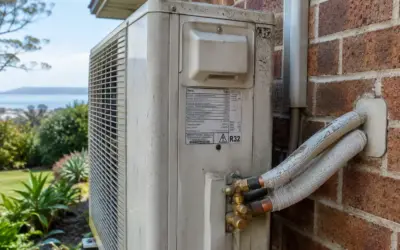
- Walk around the outdoor unit and look for anything obvious, like a dead animal, rubbish or mulch piled against it.
Beyond that, we’d leave it. Spraying household cleaners or disinfectant into the vents is the most common mistake we see. Those chemicals can damage the coil and plastic parts, and they rarely reach the mould anyway, because it sits deep behind the fan.
A proper clean fixes most smells for good
For the musty, sour and stale smells that make up most of our calls, the fix is a clean rather than a new part. When we carry out air conditioner cleaning on the Central Coast, we start with a full inspection, then remove the filters, covers and accessible internal parts. Everything is cleaned and sanitised with an eco-friendly, hospital-grade anti-mould treatment. We clean the evaporator coil and blower fan, flush the drain line, and test the system before we leave.
Keeping the smell away after that is mostly about routine. We recommend a professional clean at least once a year, or more often if you use the system daily, have pets or allergies, or live somewhere humid. On the Coast, that’s most of us.
If your system has a smell that won’t shift, from Woy Woy up to Lake Haven, we can sort it out. Book a deep clean and anti-mould treatment and we’ll find the source rather than covering it up.
Straight answers about air conditioner smells
How do I get rid of a bad smell from my air conditioner?
Start by rinsing the filters and noting when the smell happens. If it’s musty or sour and keeps coming back, the source is almost always mould on the coil, fan and drain tray. That needs the unit opened up and properly cleaned and sanitised, because sprays and deodorisers only mask it for a day or two.
Why does my air conditioner smell like vinegar?
Most often it’s bacteria and mould growing inside the indoor unit, which give off a sour smell. Less often, it’s an electrical part overheating. If the smell is sharp and constant rather than strongest at start-up, switch the unit off and have it checked.
Why does my air conditioner smell like burning?
A faint dusty smell the first time you run it after a long break is usually just dust, and it clears within minutes. A smell of hot plastic or smoke that lingers is an electrical fault. Turn the system off at the isolator or breaker and don’t use it until it has been inspected.
What are the symptoms of a refrigerant leak?
Weaker cooling or heating, the system running longer than it used to, ice on the pipes or indoor coil, and sometimes a hissing sound. Smell is the least reliable sign, because modern refrigerants have very little odour. A licensed technician needs to find and repair the leak before the system is regassed.
Does air conditioner refrigerant smell like gas?
No. A rotten egg smell comes from natural gas or LPG, which has an odour added on purpose. Air conditioner refrigerant has very little smell. If you smell rotten eggs, treat it as a gas leak and get outside before calling your gas supplier.
Is it safe to keep running an air conditioner that smells?
It depends on the smell. Musty or stale odours aren’t an emergency, although mould spores aren’t great for anyone with asthma or allergies. Burning, electrical or rotten egg smells are a different matter: switch off and deal with them straight away.