Most people who ask us about ducted vs split system air conditioning are standing at the same fork in the road. They are either renovating, building, or finally fed up with lugging a portable unit from room to room, and they want one straight answer: which one is right for my house? The honest reply is that it depends on your home, how you live in it, and your budget. But that does not mean the decision is a mystery. Once you understand what each system is actually good at, the right choice usually becomes fairly obvious.
We have been installing and servicing both across the Central Coast for over 15 years, from tight two-bedroom units in Woy Woy to sprawling family homes up in Matcham. Here is how we help people think it through.
What each system actually is, in plain terms
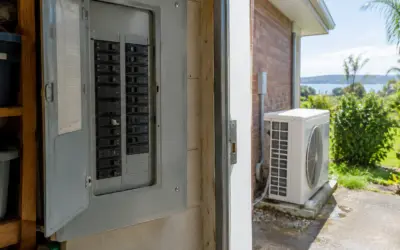
A split system has two parts. One unit sits on the wall inside the room you want to cool or heat, and a second unit sits outside. They are joined by pipes running through a small hole in the wall. One indoor unit looks after one space. If you want to cool three rooms, you generally need three split systems (or a multi-head setup that runs several indoor units off one outdoor unit).
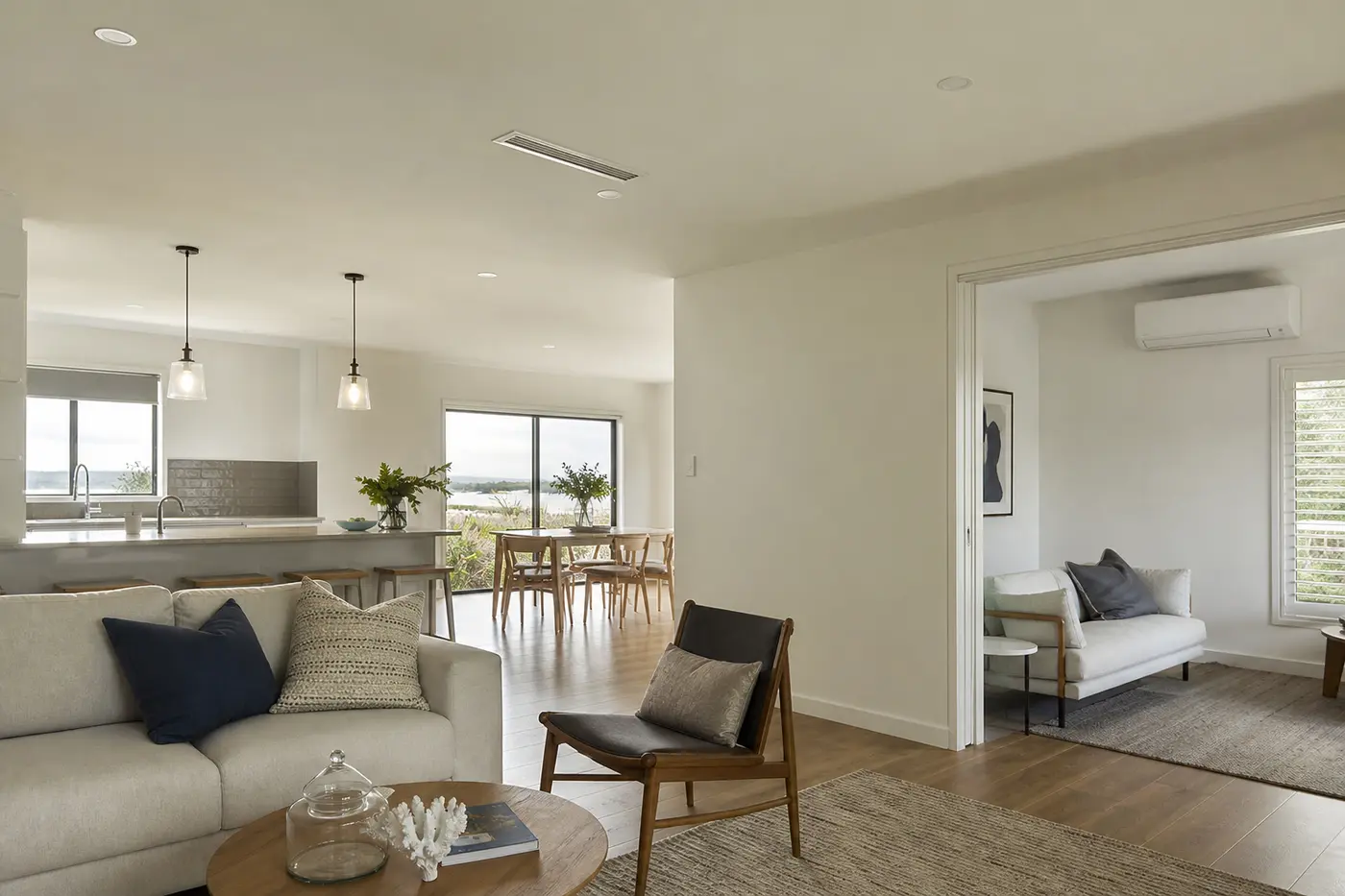
A ducted system hides the main unit in your roof space. From there, insulated ducts carry cooled or heated air to vents in the ceiling of each room. You control it from a wall panel, and with zoning you can switch different parts of the house on and off. The result is whole-home comfort with almost nothing on show except a few discreet grilles.
The real question is how many rooms you want comfortable
This is the fork that matters most, and it cuts through most of the confusion. If you spend your evenings in one or two rooms and rarely need the rest of the house cooled, a split system does the job for a fraction of the cost. A bedroom, a home office, a living area: a well-sized unit in each of those will keep you comfortable without you paying to cool space you are not using.
Ducted comes into its own when you want the whole place at an even temperature. Big open-plan living, several bedrooms in use, a household where someone is always home. Trying to achieve that with five separate wall units gets expensive and starts to look cluttered. One zoned ducted system handles it quietly from the roof.
Upfront cost: split wins per room, ducted is the bigger project
There is no getting around it. A single split system is the cheaper way to cool one room, and it is the cheaper install too. The pipework is simple and the job is often done in a few hours. That is why splits are so popular in rentals, apartments and smaller homes.
Ducted is a larger undertaking. It needs room in your roof for the unit and ducting, and the install takes longer. The catch that surprises people is the crossover point. Once you are buying three, four or five split systems to cover a whole house, the total can creep up towards what a ducted system would have cost you in the first place, and you end up with a wall unit in every room instead of a tidy central setup. If you want the real numbers for our area, we break them down in our guide to what ducted air conditioning costs on the Central Coast so you can compare like for like.
Running costs depend on how much of the house you heat
People often ask which is cheaper to run, and the answer flips depending on your habits. To cool a single room, a split system is more economical, because you are only powering that one space. Nothing else is drawing electricity.
Ducted can be the thirstier option if you run the whole house at once, since you are conditioning a much larger volume of air. This is exactly why zoning matters so much. A modern zoned ducted system lets you shut off the bedrooms during the day and only cool the living area, which brings the running cost right down and makes it competitive with running several splits. If you cool three or more rooms regularly, a well-zoned ducted system is often the smarter long-term spend.
Living near the water changes the sums a little
Our coastal air is hard on equipment. Salt carries inland further than most people expect, and it speeds up corrosion on outdoor units. With splits, every room you add means another outdoor unit exposed to that salt air, so that is more hardware to rinse down and keep an eye on over the years. A ducted setup has a single outdoor condenser to protect and maintain.
Whichever way you go, the coastal climate is a strong argument for regular servicing. We cover why in our piece on getting the best performance from AC in coastal conditions. It is the single biggest thing that separates a system that lasts from one that limps.
A simple way to land on your answer
When someone is genuinely stuck, we ask them a few questions. How many rooms do you actually want comfortable at the same time? Are you staying in this house long term, or is resale on the horizon? Do you have usable roof space? What is your budget today, not just the sticker price?
As a rough guide, if you own your home, plan to stay, want even comfort across several rooms and have the roof space, ducted usually earns its keep. If you are cooling one or two rooms, watching the upfront cost, or in a home where ducting is awkward, a well-chosen split system for that room is the sensible call. Plenty of homes we look after run a mix: ducted through the main living zones and a split in the granny flat or converted garage.
You do not have to guess. Our team looks at your actual home, your roof, your rooms and how you live, then tells you honestly which system fits. If ducted is the direction you are leaning, our ducted air conditioning installations across the Central Coast come with that assessment built in, so you are not paying for capacity you will never use.
Common questions about ducted vs split systems
Which is cheaper to run, a ducted or split system?
For a single room, a split system is cheaper to run because it only conditions that one space. Ducted can use more power if you run the entire house at once, but a zoned ducted system that only cools the rooms in use closes most of that gap. The more rooms you regularly cool, the more sense ducted makes on running cost.
What are the disadvantages of ducted air conditioning?
The main ones are a higher upfront cost and a bigger install, since it needs roof space and ductwork. It can also cost more to run if you cool the whole house without using zones. And because everything runs off one central unit, a fault can affect the whole system rather than a single room, which is why regular servicing matters.
How long does a ducted air conditioning system last?
With regular servicing, most systems run well for somewhere between 10 and 15 years, and often longer. Coastal homes tend to sit at the lower end of that range unless the outdoor unit is rinsed and serviced to keep salt corrosion in check. Skipping maintenance is the fastest way to shorten a system’s life.
Is it cheaper to leave air conditioning on all day or turn it off and on?
For most homes, turning it off when you are out is cheaper than running it all day. A modern inverter system does not use much to hold a temperature once the room is settled, so leaving it on for short absences is fine, but there is no saving in cooling an empty house for hours. Zoning helps here too, letting you cool only the rooms you are using.
Can I start with a split system and add ducted later?
Yes, and a lot of Central Coast homes do exactly this. Some start with a split in the main living room, then move to ducted during a renovation or when the budget allows. If you think ducted is where you will end up, it is worth mentioning early so any electrical or roof work can be planned with that in mind.
What is the $5000 rule for air conditioners?
It is a rough repair-or-replace guide: multiply the age of the unit by the cost of the repair, and if the figure comes out above $5000, replacement is usually the better value. It is a handy sanity check rather than a hard rule, and for a coastal system the deciding factor is often how corroded the outdoor unit has become. We are happy to give you a straight opinion before you spend money on an older unit.